

Russia recruits foreign nationals from impoverished nations for Ukraine war
Translated from Romanian, summarized and contextualized by DistantNews.
At a glance
News
Named sources
Context piece
- Russia is recruiting men from impoverished countries to fight in Ukraine, with some unaware they will be deployed to the front lines.
- Reports suggest over 27,000 foreign nationals have been sent by Russia to fight in the conflict.
- These recruitment efforts target individuals in precarious economic and legal situations, using attractive offers, deception, or coercion.
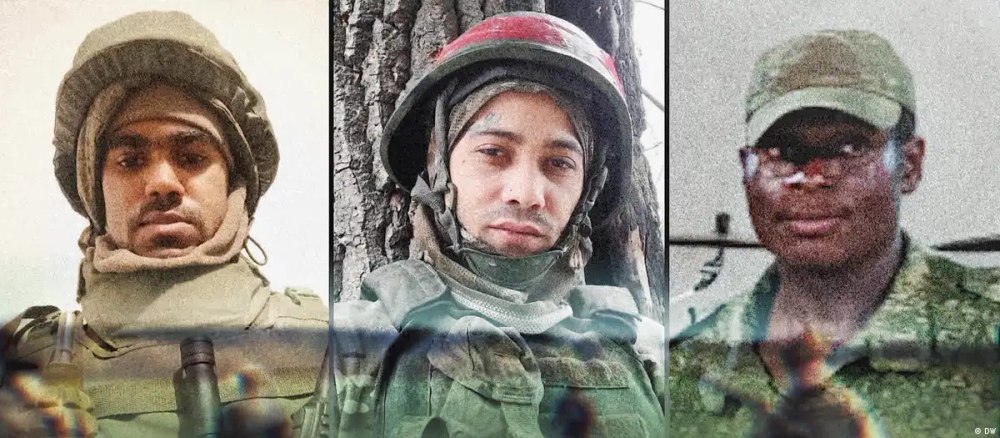
Russia is increasingly recruiting men from the world's poorest nations to serve on the front lines in Ukraine, with some recruits reportedly unaware they are heading into combat. The Ukrainian military intelligence service (HUR) estimates that over 27,000 foreign nationals have been sent by Russia to fight in the war.
One case highlighted is that of Oscar Khagola Mutoka, a former Kenyan soldier who traveled to Russia in the summer of 2025 seeking work. His father, Charles Mutoka, recounts his son's departure and subsequent silence after sending a photo in military uniform. The family later learned of Oscar's death but has been unable to recover his body, leaving them with a symbolic grave and deep uncertainty about his final resting place.
A study by the International Federation for Human Rights (FIDH), Truth Hounds, and the Kazakh International Bureau for Human Rights and the Rule of Law indicates Russia has established a global network for attracting foreign citizens. Ilia Nusov, an author of the study, explained that recruitment targets individuals facing economic, social, and legal precarity, employing methods ranging from appealing offers and deception to outright coercion.
For many in impoverished regions, the promised salary from the Russian army is a powerful incentive, offering a potential escape from poverty and a means to support their families. This was the case for Cuban national Yoan Viondi Mendoza, who was promised $2,000 per month – a substantial sum compared to Cuba's average monthly wage of just $20. Mendoza's brother, Michael Duro, shared that Yoan saw this as a way to overcome financial and bureaucratic hurdles to emigrate to the United States, where Duro was undergoing cancer treatment. Yoan spoke of a "project in Russia" before his departure.
Această recrutare vizează persoane aflate în situații de precaritate economică, socială și juridică. Metodele folosite merg de la oferte atractive și înșelăciune până la constrângere.
DistantNews Editorial
Originally published by Adevărul in Romanian. Translated, summarized, and contextualized by our editorial team with added local perspective. Read our editorial standards.
More Stories


From Our Blog

What Gets Lost (and Found) When News Is Translated

The Critical Role of Diaspora Media in Global News

What Travellers Should Know About Countries with Restricted Press

A Digital Nomad's Guide to Following Local News

How the Same Story Looks Different in Different Countries
