

Russia's internal front cracks as elites panic over war costs and infrastructure strikes
Translated from Polish, summarized and contextualized by DistantNews.
At a glance
Analysis
Named sources
Context piece
- Ukraine's strategy of "kinetic sanctions," targeting Russian critical infrastructure like oil refineries and fuel depots, is yielding significant economic and military results.
- These strikes are disrupting fuel supplies within Russia and near the front lines, impacting the operational capabilities of Putin's army and hindering the transport of essential goods.
- Experts suggest that these actions, combined with ground and drone operations, are severely limiting Russia's offensive capabilities, while internal dissent grows due to war costs and casualties.
Ukraine's "kinetic sanctions" strategy, focusing on precision strikes against Russian critical infrastructure, is proving effective in disrupting the war effort. By systematically targeting oil refineries and fuel depots, Ukraine inflicts tangible economic and military damage, directly impacting the operational capacity of Vladimir Putin's army. The resulting fuel shortages extend beyond Russia's interior, critically affecting areas near the front lines.
This lack of fuel paralyzes the efficient transport of ammunition, medicine, and food via trucks. It also cripples the operation of power generators essential for frontline troops. Combined with the steady efforts of Ukrainian infantry and drone units, these disruptions severely curtail Russia's ability to launch major offensive operations, such as those planned in the Zaporizhzhia direction.
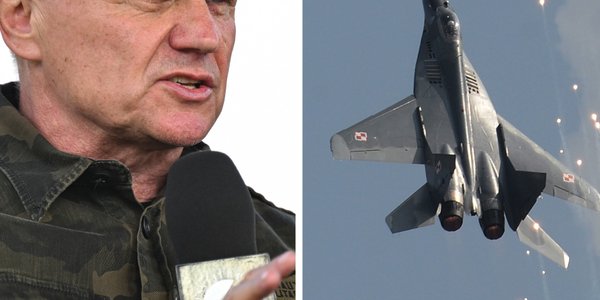
Dr. Marek Kozubel notes the effectiveness of these Ukrainian actions, stating that "kinetic force has a greater impact during war than some piece of paper, to put it brutally." He emphasizes that fuel shortages at the front will also affect generators, presenting an additional challenge for Russian forces.
These Ukrainian actions are definitely yielding the desired effect. [...] Kinetic force has a greater impact during war than some piece of paper, to put it brutally. [...] If there is a lack of gasoline at the front, there will also be a lack for power generators, and then the Russians will also have an additional problem at the front.
The long-term costs of the invasion are beginning to destabilize Russia's social order. The shift from mass mobilization to a costly mercenary recruitment model, promoted through contracts, indicates that Russian society does not exhibit unconditional patriotism. Loyalty must be bought, a situation complicated by high casualties, a drastic decline in living standards, and drone attacks on major cities bringing the war directly into Russian civilian life.
This breach of the unwritten social contract, where citizens accepted the Kremlin's imperial policies in exchange for peace and security, is causing genuine anxiety even among Russian propagandists and military figures. Some are now openly warning of the risk of the "internal front" collapsing, drawing parallels to the situation before the February Revolution of 1917. As one commentator observed, Russian citizens are acting more like mercenaries than patriots, and figures like Sivkov fear a repeat of 1917 as the internal front begins to crack.
Russian citizens, instead of fulfilling their civic duty and going to the army because there is mobilization, are actually hiring themselves out like ordinary mercenaries. [...] Instead of appealing to patriotism and civic duty, the Kremlin has had to resort to simply paying its own citizens to fight. [...] Sivkov recently announced that he is genuinely afraid of a repeat of February 1917. [...] He simply sees that, in his opinion, the Russian rear [...] the internal front, is starting to crack. It is faltering.
DistantNews Editorial
Originally published by Rzeczpospolita in Polish. Translated, summarized, and contextualized by our editorial team with added local perspective. Read our editorial standards.
More Stories

From Our Blog

What Gets Lost (and Found) When News Is Translated

The Critical Role of Diaspora Media in Global News

What Travellers Should Know About Countries with Restricted Press

A Digital Nomad's Guide to Following Local News

How the Same Story Looks Different in Different Countries
