


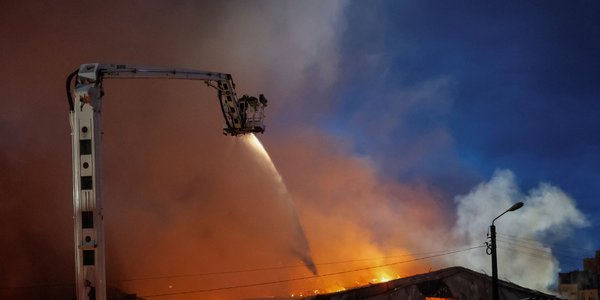
Russia's missile capacity strained amid intensified attacks on Kyiv
Translated from Polish, summarized and contextualized by DistantNews.
At a glance
News
Sources not specified
Ongoing story
- Russia has intensified missile attacks on Kyiv and other regions, using a high number of ballistic and hypersonic missiles.
- Ukraine's air defense effectiveness has decreased since spring, partly due to a shortage of Patriot system interceptor missiles.
- Experts believe Russia's production capacity for these missiles is nearing its limit, questioning its ability to sustain the current tempo of attacks.
Russia has escalated its missile attacks on Kyiv and other Ukrainian regions, employing a significant number of ballistic, quasi-ballistic, and hypersonic missiles. In the first half of July, Russia conducted three major strikes, deploying a total of 66 missiles. This volume is comparable to the number used from March to May, indicating a substantial increase in the pace of attacks.
Ukraine's air defense capabilities have shown a decline in effectiveness since the spring. While Ukraine gained the ability to intercept ballistic missiles with the introduction of the Patriot system in May 2023, its success rate has diminished. In May, for instance, only 11 percent of incoming missiles were intercepted. This decrease is attributed, in part, to a shortage of PAC-3 interceptor missiles for the Patriot systems, exacerbated by U.S. usage during the war with Iran.
Analysts suggest Russia is leveraging this perceived vulnerability, initiating what is described as "ballistic terror" since early June. The tactic involves two large attacks per month, each using over 30 ballistic missiles, or three to four smaller attacks. However, experts question Russia's long-term capacity to maintain this intensity. Ukrainian military intelligence estimates that Russia's production of Iskander missiles is struggling to keep pace with monthly demand, and further increases in production are unlikely without external aid, simplified manufacturing processes, or reduced costs.
The Zircon missile, another weapon in Russia's arsenal, is noted for being expensive and complex to produce. While Russia may sustain its current attack tempo through July, military analysts doubt its ability to do so beyond that period, despite having reportedly increased missile production two to three times.
DistantNews Editorial
Originally published by Rzeczpospolita in Polish. Translated, summarized, and contextualized by our editorial team with added local perspective. Read our editorial standards.
More Stories


From Our Blog

What Gets Lost (and Found) When News Is Translated

The Critical Role of Diaspora Media in Global News

What Travellers Should Know About Countries with Restricted Press

A Digital Nomad's Guide to Following Local News

How the Same Story Looks Different in Different Countries
