


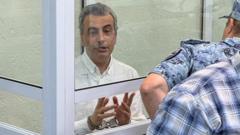
Russia's prominent anti-war politician jailed for 11 years
Summarized and contextualized by DistantNews.
At a glance
News
Named sources
In the courts
- Russian anti-war politician Lev Shlosberg was sentenced to 11 years and one month in prison for "discrediting" and spreading "false information" about the country's armed forces.
- Shlosberg condemned the verdict, calling the trial an "imitation of an investigation" and vowed to appeal.
- His party, Yabloko, was also banned from participating in upcoming parliamentary elections.
Lev Shlosberg, a prominent anti-war politician in Russia, has been sentenced to 11 years and one month in a penal colony. A court in Pskov found him guilty of "public actions aimed at discrediting the use of the armed forces of the Russian Federation" and spreading "false information" about them. Shlosberg, 63, denounced the verdict, stating the court's sole purpose was to "punish a person for his political, public and civil position." He described the trial as an "imitation of an investigation" designed to achieve an "obviously illegal goal." His liberal political party, Yabloko, of which he is deputy head, announced it would appeal the ruling. The sentence was handed down shortly before Russia's Supreme Court rejected Yabloko's appeal against a ban preventing its participation in the September parliamentary elections. Yabloko was the only registered party to oppose Russia's full-scale invasion of Ukraine. Public dissent in Russia has been severely suppressed since the invasion began in 2022, with wartime censorship laws leading to hefty fines or lengthy prison sentences. Shlosberg reiterated his call for a ceasefire in the Russia-Ukraine war and the initiation of "political dialogue." The court repeatedly interrupted him during his closing statement. Yabloko was previously removed from election ballots due to accusations of supporting the "international LGBT movement," which Russia's Supreme Court deems extremist. The party rejects all accusations.
punish a person for his political, public and civil position
DistantNews Editorial
Originally published by BBC News. Summarized and contextualized by our editorial team with added local perspective. Read our editorial standards.
More Stories


From Our Blog

What Gets Lost (and Found) When News Is Translated

The Critical Role of Diaspora Media in Global News

What Travellers Should Know About Countries with Restricted Press

A Digital Nomad's Guide to Following Local News

How the Same Story Looks Different in Different Countries
