

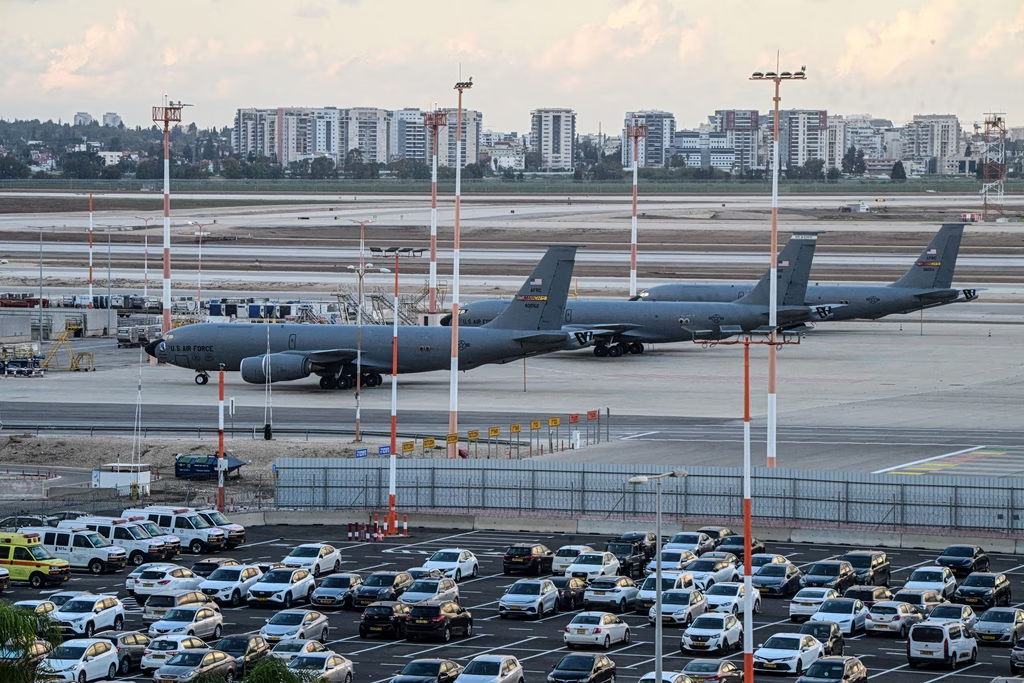

Russian hackers target NATO security cameras for Ukraine intel, Greece among targets
Translated from Greek, summarized and contextualized by DistantNews.
At a glance
News
Named sources
Under investigation
- Russian hackers are targeting internet-connected security cameras across Europe and Ukraine, including Greece, to gather intelligence.
- The hackers exploit weak security measures like default passwords and outdated software to gain access.
- The collected information, including military movements and equipment, is used for cyber espionage and potentially for targeting Ukrainian troops.
Russian state-sponsored hackers are systematically targeting internet-connected security cameras throughout Europe and Ukraine, with Greece identified as one of the countries in their crosshairs. This widespread cyber espionage campaign aims to collect valuable military intelligence, according to warnings from Dutch intelligence services.
The hackers exploit vulnerabilities in the cameras, such as default passwords, outdated software, and factory settings, to gain unauthorized access. Once inside, they use image recognition software to analyze video feeds, identifying military vehicles and their cargo. This information is crucial for monitoring military supply routes, equipment transports, and arms shipments destined for Ukraine.
As a key transit country, the Netherlands is an important target for espionage due to its geographical location and its support for Ukraine.
Dutch intelligence agencies, including the General Intelligence and Security Service (AIVD) and the Military Intelligence and Security Service (MIVD), have identified at least one Russian intelligence service coordinating these operations. The Netherlands, due to its significant role as a transit country and its support for Ukraine, is considered a key target for this espionage.
While Moscow has consistently denied engaging in malicious cyber operations, the Dutch services have detected compromised cameras along military supply routes within the country. The collected data could be used not only for operations related to the Ukraine conflict but also for broader military intelligence gathering within NATO and EU member states, demonstrating Russia's persistent cyber espionage capabilities.
This campaign shows Russia's ability to collect operational information that could be used for military purposes.
DistantNews Editorial
Originally published by Ta Nea in Greek. Translated, summarized, and contextualized by our editorial team with added local perspective. Read our editorial standards.
More Stories


From Our Blog

What Gets Lost (and Found) When News Is Translated

The Critical Role of Diaspora Media in Global News

What Travellers Should Know About Countries with Restricted Press

A Digital Nomad's Guide to Following Local News

How the Same Story Looks Different in Different Countries
