


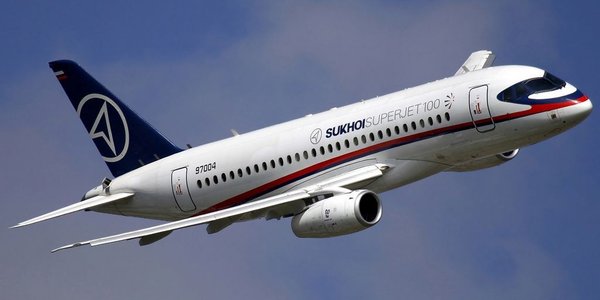
Russian Jet Engines Cost as Much as Whole Aircraft Amid Sanctions
Translated from Polish, summarized and contextualized by DistantNews.
At a glance
News
Sources not specified
Context piece
- Russia's aviation sector faces significant challenges due to Western sanctions, impacting the production and servicing of aircraft like the Super Jet 100 (SSJ-100).
- Replacing the SSJ-100's French-designed SaM-146 engines with Russian PD-8 engines is prohibitively expensive, costing as much as a whole aircraft before the war.
- The high cost of modernization and uncertain lifespan of upgraded aircraft raise questions about the long-term viability of Russia's domestic aircraft industry, with projections suggesting fewer than 30 SSJ-100s may remain operational by 2030.
Russia's aviation industry is grappling with severe repercussions from Western sanctions imposed following the invasion of Ukraine, significantly hindering its access to Western-made components and services. The Super Jet 100 (SSJ-100), Russia's sole next-generation passenger aircraft, is particularly affected as its engines were originally a French-Russian joint venture.
Following the 2022 invasion, French company Safran, a key partner in the SaM-146 engine's production and servicing, ceased its collaboration with Russia's United Aircraft Corporation (OAK), which is part of the sanctioned Rostech conglomerate. This severed ties mean Russia is cut off from essential parts and maintenance, forcing a search for domestic alternatives.
OAK has proposed replacing the SaM-146 engines with Russia's domestically produced PD-8 engines for 50 of the existing 160 SSJ-100 aircraft. However, preliminary estimates reveal a staggering cost: upgrading a single aircraft with a new engine is projected to cost 2.3 billion rubles (approximately $25 million USD). This figure is comparable to the pre-war price of an entire aircraft, and costs are expected to rise further due to increasing component prices.
Adding to the financial strain, Rostech hopes for state budget funding or contributions from aircraft owners, primarily Russian airlines like Aeroflot. However, these carriers are themselves facing financial difficulties. Rostech is also advocating for extending the lifespan of existing SaM-146 engines as a more cost-effective measure. Despite modernization discussions, projections from OAK suggest that fewer than 30 SSJ-100 aircraft will remain operational by 2030 due to the expiration of their service life, with industry insiders suggesting the number could be even lower.
DistantNews Editorial
Originally published by Rzeczpospolita in Polish. Translated, summarized, and contextualized by our editorial team with added local perspective. Read our editorial standards.
More Stories


From Our Blog

What Gets Lost (and Found) When News Is Translated

The Critical Role of Diaspora Media in Global News

What Travellers Should Know About Countries with Restricted Press

A Digital Nomad's Guide to Following Local News

How the Same Story Looks Different in Different Countries
