

Rzeszów Airport passengers can now carry two liters of liquids on planes with new scanners
Translated from Polish, summarized and contextualized by DistantNews.
At a glance
News
From a news agency
New plan
- Rzeszów-Jasionka Airport has upgraded its security checkpoint with new C3 scanners, allowing passengers to carry larger quantities of liquids.
- The new scanners also permit electronic devices like laptops and tablets to remain in carry-on luggage, speeding up security checks.
- This modernization, costing 13.5 million Polish zloty, makes Rzeszów the third airport in Poland to lift the 100-milliliter liquid limit.
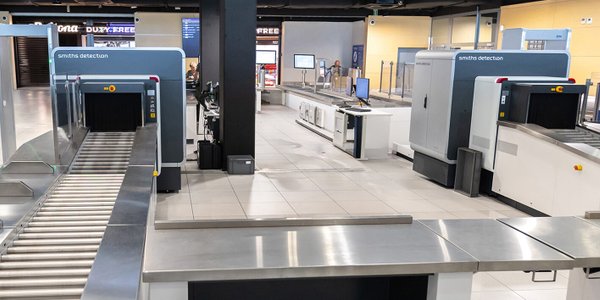
Passengers at Rzeszów-Jasionka Airport can now carry up to two liters of liquids in their carry-on baggage, a significant change following the official launch of the airport's modernized security checkpoint. The upgrade features advanced C3 scanners, which eliminate the previous 100-milliliter liquid restriction and allow electronic devices such as laptops and tablets to remain packed. This streamlining is expected to reduce passenger processing times and enhance overall travel comfort.
The full implementation of C3 standard scanners allows us to streamline control, reduce the number of steps for passengers, and simultaneously increase the effectiveness of threat detection.
Adam Hamryszczak, the airport's president, highlighted the investment's impact on both security and passenger experience. "The full implementation of C3 standard scanners allows us to streamline control, reduce the number of steps for passengers, and simultaneously increase the effectiveness of threat detection," he stated. Rzeszów joins Kraków and Poznań as the third airport in Poland to adopt these more relaxed liquid regulations.
This undertaking is important both from the perspective of security and the development of regional transport infrastructure.
The modernization project, costing nearly 13.5 million Polish zloty, was partially funded by a 6.68 million zloty grant from the FEnIKS program, with the remainder covered by the airport. The upgrade includes three C3 X-ray scanners, automated tray transport lines, four access gates, and a 20-camera surveillance system. Notably, the new technology allows for reduced control stations from six to three while maintaining previous throughput capacity. The airport also emphasized improved accessibility for passengers with disabilities, with simplified procedures and adapted stations designed to ease movement through the security zone.
The modernization of the Security Control Point shows that properly utilized European funds can effectively support modern solutions that improve the quality of passenger service and accessibility.
DistantNews Editorial
Originally published by Rzeczpospolita in Polish. Translated, summarized, and contextualized by our editorial team with added local perspective. Read our editorial standards.
More Stories
From Our Blog

What Gets Lost (and Found) When News Is Translated

The Critical Role of Diaspora Media in Global News

What Travellers Should Know About Countries with Restricted Press

A Digital Nomad's Guide to Following Local News

How the Same Story Looks Different in Different Countries
