


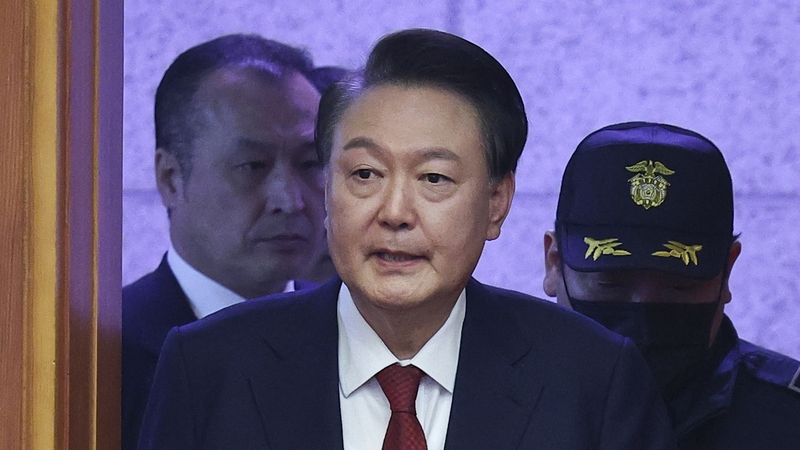
S. Korea's Yoon sentenced to 30 years over drone incident
Summarized and contextualized by DistantNews.
At a glance
News
Named sources
In the courts
- Former South Korean President Yoon Suk Yeol received a 30-year prison sentence for sending drones into North Korea.
- Prosecutors argued this action was intended to create a pretext for his 2024 martial law declaration.
- Yoon has appealed a separate life sentence for leading an insurrection to paralyze the National Assembly.
Former South Korean President Yoon Suk Yeol has been sentenced to 30 years in prison for sending drones into North Korea, a move prosecutors contended was designed to fabricate wartime conditions and justify his controversial martial law declaration in 2024. The Seoul Central District Court confirmed the sentence, though further details were not immediately available.
Given 30 years in jail
Prosecutors had argued that Yoon's alleged operation to "fabricate wartime conditions" through the drone flights undermined state security and heightened tensions with North Korea. The incident also reportedly led to the leak of classified information about South Korea's force capabilities after the drones crashed, according to Yonhap news agency.
This sentence is in addition to a life imprisonment term Yoon received for leading an insurrection aimed at paralyzing South Korea's National Assembly. Yoon is appealing this insurrection conviction, maintaining that he declared martial law "solely for the sake of the nation."
solely for the sake of the nation
Yoon's legal team has denied the charges related to the drones, stating there was "no prior order or subsequent approval" for the operation. They characterized the drone flights as a "legitimate act of self-defence" in response to North Korea sending balloons carrying trash across the border, and asserted it was unrelated to the martial law declaration. Lawyers dismissed the prosecution's claims as a "speculative and false novel."
no prior order or subsequent approval
Drone flights remain a sensitive issue between the two Koreas, which are technically still at war. The case highlights the ongoing friction and mistrust that characterize inter-Korean relations, even as diplomatic efforts have seen periods of attempted rapprochement.
a legitimate act of self-defence
DistantNews Editorial
Originally published by RTÉ News. Summarized and contextualized by our editorial team with added local perspective. Read our editorial standards.
More Stories


From Our Blog

What Gets Lost (and Found) When News Is Translated

The Critical Role of Diaspora Media in Global News

What Travellers Should Know About Countries with Restricted Press

A Digital Nomad's Guide to Following Local News

How the Same Story Looks Different in Different Countries
