


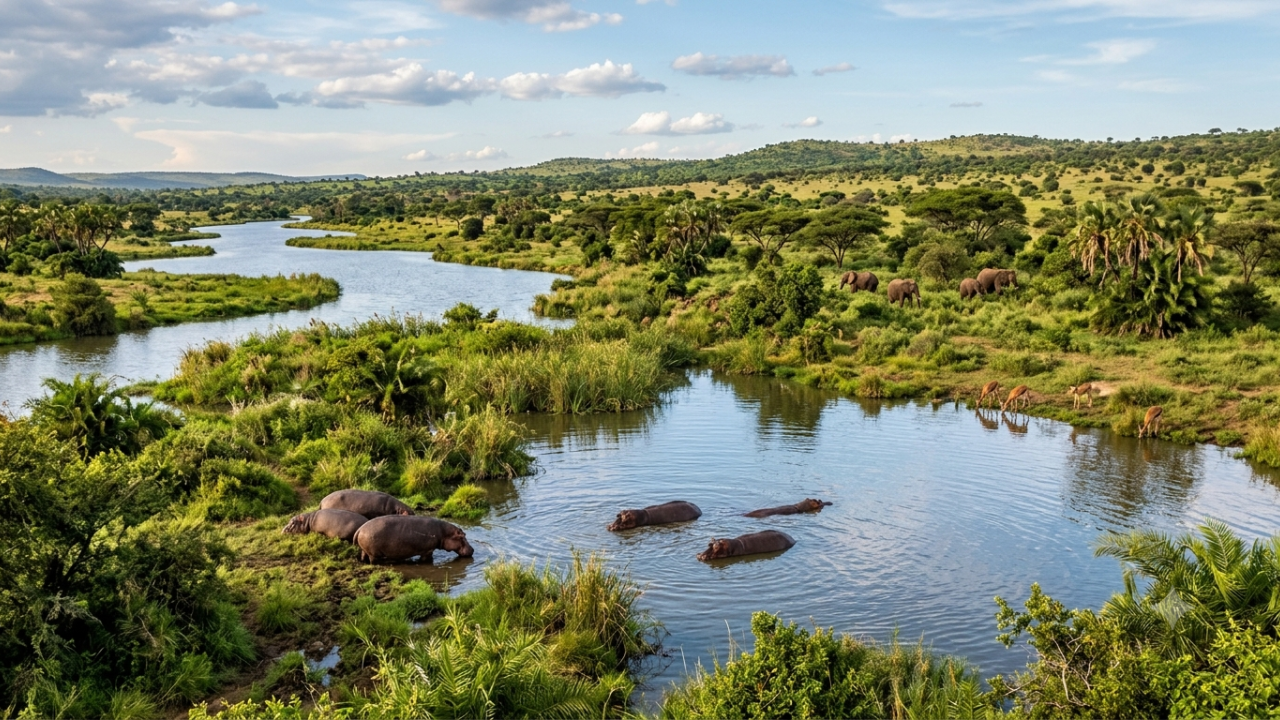
Sahara's Green Cycles: Rivers, Lakes, and Hippos Explained by Earth's Orbit
Translated from English, summarized and contextualized by DistantNews.
At a glance
Explainer
Documents & data
Context piece
- The Sahara Desert, currently known for its harsh conditions, was once a lush environment with rivers, lakes, and diverse wildlife.
- These transformations are part of a natural climate cycle driven by Earth's axial precession, occurring roughly every 20,000 years.
- Plant growth plays a crucial role in sustaining these "Green Sahara" periods by altering the landscape and retaining moisture.
The Sahara Desert, widely perceived as an arid wasteland, has a dynamic past characterized by abundant water and life. Geological evidence reveals ancient river systems, vast lakes, and ecosystems that once supported hippos and crocodiles, alongside thriving human populations. Scientists now understand these dramatic shifts are not random but are governed by a natural climate rhythm that has shaped North Africa over millions of years.
New research, integrating satellite data and ocean sediment analysis, is shedding light on why the world's largest hot desert repeatedly transitions into a fertile green landscape. These periods of increased rainfall occur approximately every 20,000 years. This cycle is linked to axial precession, a slow wobble in Earth's rotational axis. As the planet's orientation shifts, the timing of seasons changes relative to its orbit around the sun. At certain points, northern summers experience more intense sunlight when Earth is closer to the sun, leading to increased heating.
This amplified solar heating triggers a stronger African summer monsoon. Moist air penetrates farther north, bringing rain to regions now considered arid. This rainfall supports vegetation, rivers, and lakes across large swathes of the Sahara. However, the transformation is not solely dependent on orbital mechanics. Once plants establish, they actively modify the environment. Darker vegetation absorbs more sunlight than pale sand, warming the ground. Plants also help soils retain moisture, and fewer dust particles are released into the atmosphere. Evaporation from newly formed lakes and wetlands further contributes moisture, creating a feedback loop that sustains rainfall and keeps the landscape green for thousands of years.
A 2023 modeling study published in Nature Communications, led by Edward Armstrong of the University of Helsinki, analyzed North African humid periods over the past 800,000 years. Using a sophisticated climate model, the research identified approximately 230 humid phases, highlighting the cyclical nature of these transformations.
DistantNews Editorial
Originally published by Times of India in English. Translated, summarized, and contextualized by our editorial team with added local perspective. Read our editorial standards.
More Stories



From Our Blog

What Press Freedom Means for the News You Read

What Gets Lost (and Found) When News Is Translated

The Critical Role of Diaspora Media in Global News

What Travellers Should Know About Countries with Restricted Press

A Digital Nomad's Guide to Following Local News
