


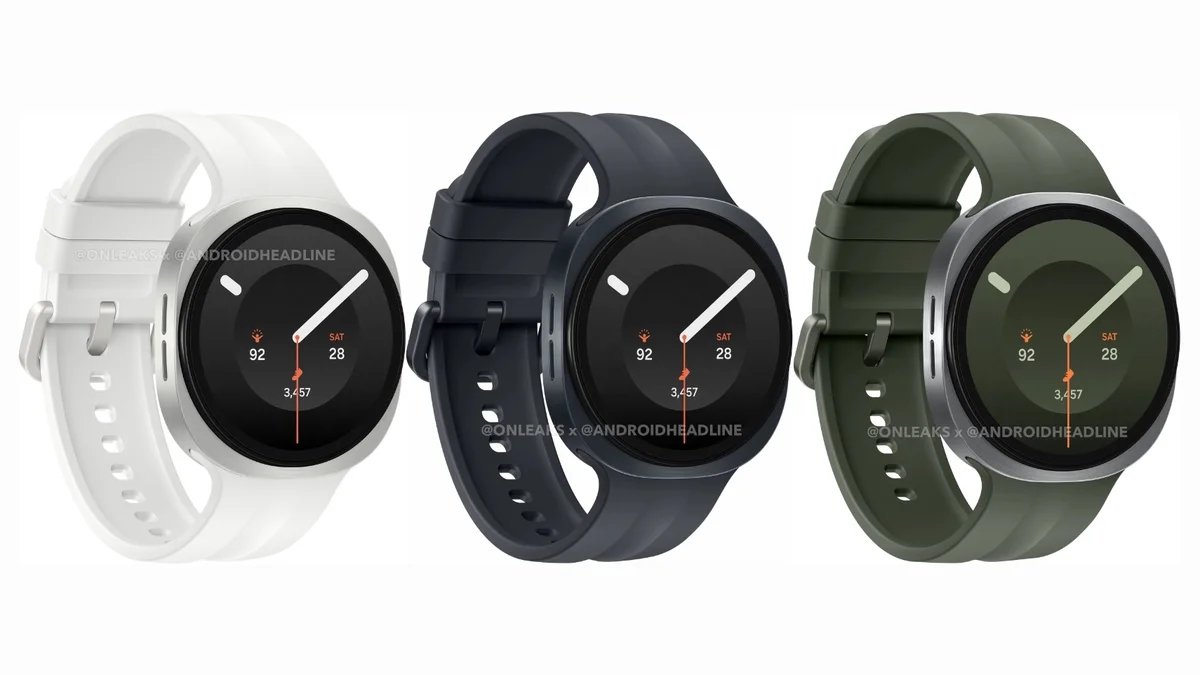
Samsung's 'Galaxy Watch 9' Takes Shape: Distinct Styles Through Color
Translated from Korean, summarized and contextualized by DistantNews.
At a glance
News
Sources not specified
New plan
- Samsung's Galaxy Watch 9 will feature a design similar to its predecessor but with distinct color options.
- The new smartwatch is expected to incorporate Qualcomm's Snapdragon Wear Elite chipset for improved performance.
- Internal upgrades, particularly the processor, are anticipated to enhance speed, battery efficiency, and AI-driven health analysis.
Samsung's upcoming Galaxy Watch 9 is set to launch with a design largely mirroring its predecessor, focusing instead on differentiating itself through a range of distinct color options. While the overall silhouette and bezel thickness are expected to remain similar, making it difficult for a casual observer to distinguish from older models, Samsung is prioritizing color marketing to enhance the product's appeal.
The watch will be available in 40mm and 44mm sizes, but with a stricter color allocation this year. The 40mm model will come in cream and graphite, while the 44mm will be offered in silver and graphite. This deviates from the past practice of offering all colors across all sizes. Samsung plans to pair different strap combinations with each color to emphasize the watch's individuality as a fashion item, aiming for a cream model with a bright, fashion-forward image, graphite for a classic, business-oriented look, and silver for versatility.
The most significant innovation for the Galaxy Watch 9 lies within its internal components. Samsung previously announced at MWC 2026 that its next-generation watches would feature Qualcomm's latest processor, the 'Snapdragon Wear Elite,' instead of its in-house chips. This upgrade is anticipated to boost app execution speed, improve battery efficiency, and enhance AI-based health analysis functions. However, there are also speculations that only the Watch Ultra 2 will receive this new chip, while the standard Watch 9 might retain the Exynos W1000.
This potential shift to a Qualcomm chipset is not merely about speed; it's crucial for Samsung's digital healthcare ambitions. The company has been refining its technology for precise AI analysis of health data like heart rate, blood pressure, and sleep patterns measured from the wrist. The enhanced processing power of the new chipset could enable faster, real-time detection of sleep disturbances or irregular heart rhythms, leading to quicker AI-driven health diagnoses. The product lineup may also be simplified, with recent industry trends suggesting the exclusion of a 'Classic' model with a rotating bezel this year.
DistantNews Editorial
Originally published by Dong-A Ilbo in Korean. Translated, summarized, and contextualized by our editorial team with added local perspective. Read our editorial standards.
More Stories



From Our Blog

What Gets Lost (and Found) When News Is Translated

The Critical Role of Diaspora Media in Global News

What Travellers Should Know About Countries with Restricted Press

A Digital Nomad's Guide to Following Local News

How the Same Story Looks Different in Different Countries
