


SAP's AI Era Gamble: The 'Autonomous Enterprise'
Translated from Korean, summarized and contextualized by DistantNews.
At a glance
News
Sources not specified
Context piece
- SAP Korea is redefining its role in the AI era, moving beyond traditional ERP to offer a comprehensive business ecosystem centered on the 'Autonomous Enterprise' concept.
- The company's vision involves three layers: 'Joule' for user-AI interaction, 'Autonomous Suite' with embedded AI agents for core processes, and the 'SAP Business AI Platform' as the underlying infrastructure.
- This approach aims to automate complex business processes, enhance efficiency, and provide significant value, particularly for manufacturing powerhouses like South Korea, which are early adopters of new technologies.
In an era where AI agents automate tasks and low-code platforms enable easy application development, traditional enterprise software like ERP faces questions about its continued relevance and cost. SAP, a global leader in the ERP market, is addressing this challenge by proposing a new vision: the 'Autonomous Enterprise'.
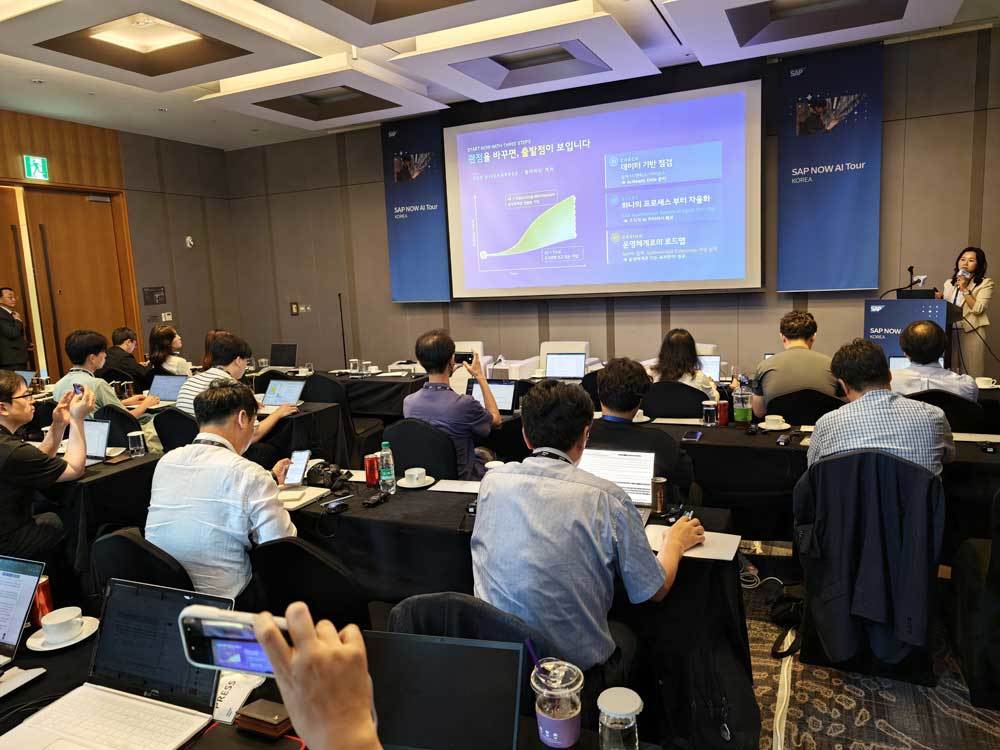
At its 'SAP NOW AI Tour Korea 2026' event, SAP Korea outlined its strategy to provide a business ecosystem that encompasses data, processes, and governance, powered by AI. This vision is structured around three key layers. First, 'Joule' serves as the entry point for users and AI interaction. Second, the 'Autonomous Suite' integrates AI agents directly into core business processes such as finance, procurement, HR, customer relations, and supply chain, enabling them to function as a unified system. Finally, the 'SAP Business AI Platform' provides the foundational intelligence, knowledge graphs, and multi-model AI capabilities that support the entire ecosystem.
Jan Bungert, SAP's Chief Revenue Officer for Business AI Platform, illustrated this with an example of a return process. 'Joule' could process return data and present a proposal, with human oversight for final decisions. Subsequently, AI agents within the 'Autonomous Suite' would autonomously handle administrative tasks like issuing credit memos, managing logistics, and notifying warehouses. This seamless operation is underpinned by the 'SAP Business AI Platform', which connects all company data through knowledge graphs, enabling these AI agents to function effectively.
Bungert also commented on why Asian manufacturing hubs like South Korea are particularly prominent in AI adoption. He noted a culture of early technology adoption and a proactive approach among companies like Samsung and LG. The complexity of supply chains in high-tech manufacturing, particularly in semiconductors and components, means that AI and agent-driven workflows offer significant value, driving early investment in these technologies. SAP emphasizes that its solutions can reduce risks and accelerate the transition for companies using on-premise ERP, potentially shortening system conversion times by up to 35% compared to traditional methods.
DistantNews Editorial
Originally published by Dong-A Ilbo in Korean. Translated, summarized, and contextualized by our editorial team with added local perspective. Read our editorial standards.
More Stories


From Our Blog

What Gets Lost (and Found) When News Is Translated

The Critical Role of Diaspora Media in Global News

What Travellers Should Know About Countries with Restricted Press

A Digital Nomad's Guide to Following Local News

How the Same Story Looks Different in Different Countries
