


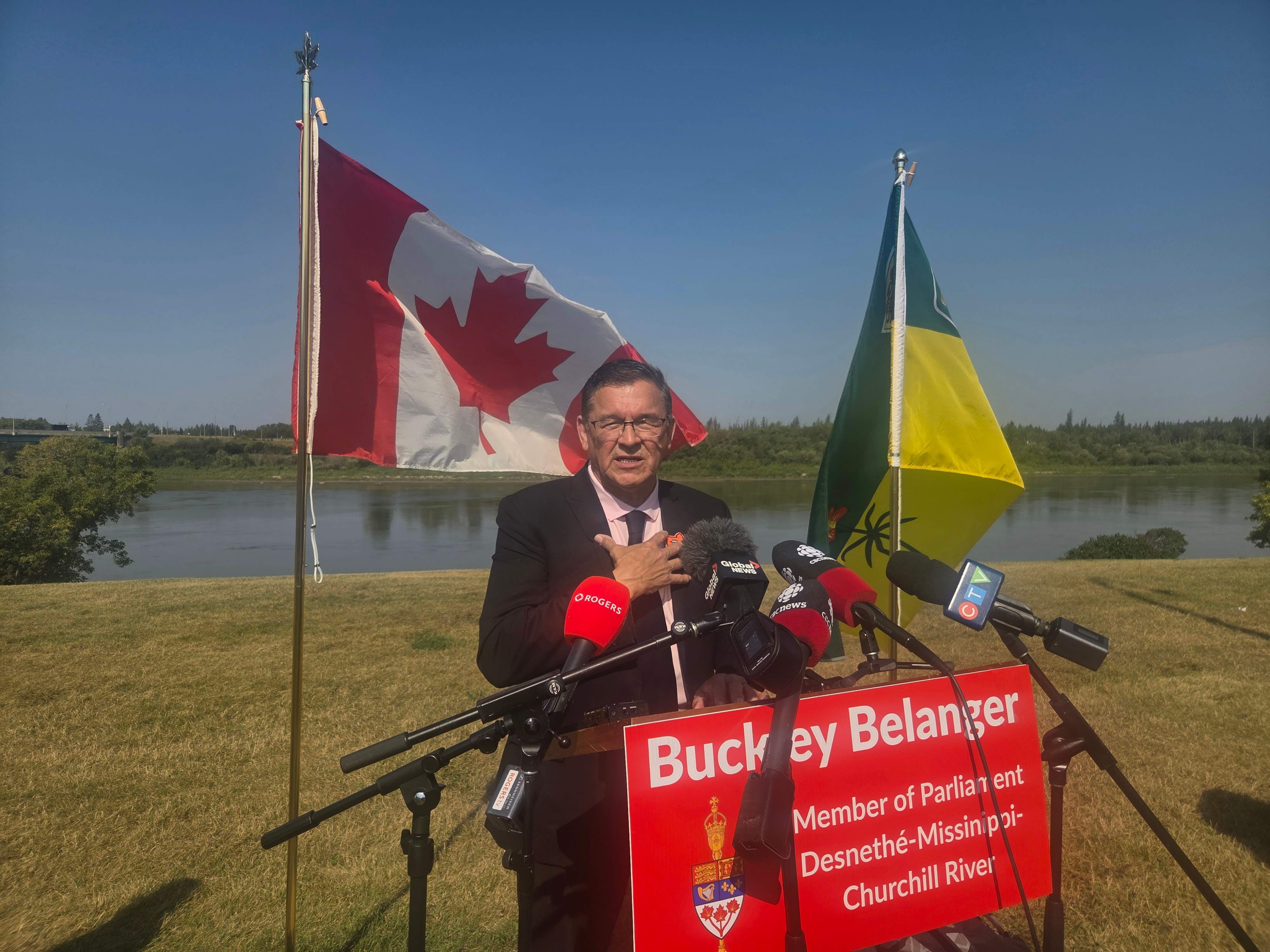
Saskatchewan MP proposes new northern university to boost opportunities
Translated from English and summarized by DistantNews. Read the original for the full story.
At a glance
News
Sources not specified
Context piece
- Saskatchewan MP Buckley Belanger is proposing the establishment of a new university in the northern part of the province.
- The initiative aims to create opportunities and serve as critical infrastructure for rebuilding the north, particularly for Indigenous communities.
- An exploratory process will engage stakeholders, including northern and Indigenous leadership, to determine the university's structure, potential programs, and operational models.
Buckley Belanger, the Member of Parliament for Desnethé-Missinippi-Churchill River, is spearheading an effort to lay the groundwork for a new university in northern Saskatchewan. Belanger shared his vision in Prince Albert, emphasizing that such an institution would be crucial for creating opportunities and fostering development in the region.
Local university training in the north is what I consider critical infrastructure in rebuilding the north.
This announcement marks the beginning of an exploratory process to assess the feasibility of establishing a university in northern Saskatchewan. While the idea is in its nascent stages, Belanger views this work as a significant stride toward rebuilding the north. He stressed that local university training is essential infrastructure for the region's revitalization.
Any future development would require close collaboration with the provincial government, northern and Indigenous leadership, and existing post-secondary institutions. The current exploratory phase aims to bring these diverse voices together to explore possibilities. Geordy McCaffrey, with over 30 years of experience in developing university opportunities for Indigenous students, will play a key role in this process.
As an exploratory process, we want to get out and engage with 30 to 50 stakeholders and find out from Indigenous leadership what their thoughts are, what their needs are.
McCaffrey indicated that the exploratory process will involve engaging with 30 to 50 stakeholders, particularly Indigenous leadership, to understand their needs and perspectives. He noted that universities can take various forms, from affiliated colleges brokering programs to federated colleges like First Nations University of Canada. As the institution matures, it could develop its own programming, research capacity, and accreditation methods.
A university can start out as an affiliated college as many of our institutions are operating now, where they broker programming from the University of Regina or the University of Saskatchewan. Or you could perhaps be a federated college like we see with First Nations University of Canada operating.
Potential fields of specialization are being considered, with a focus on professions facing chronic shortages in the north, such as teaching. McCaffrey highlighted the significant annual teacher shortage lists released by Northern Light School Division and other First Nations school divisions. Other areas of exploration could include healthcare and mining support. Despite the early stage, Prince Albert Grand Chief Brian Hardlotte expressed excitement about the prospect of more educational opportunities for northern students.
Each year, around this time of year, you start to see Northern Light School Division and other First Nations school divisions, releasing teaching shortage lists, and they are fairly massive.
About this summary
Originally published by Global News in English. Translated, summarized, and contextualized automatically by DistantNews, with a note on how the source frames the story. Not individually reviewed before publishing. How this works.
More Stories


From Our Blog

What Gets Lost (and Found) When News Is Translated

The Critical Role of Diaspora Media in Global News

What Travellers Should Know About Countries with Restricted Press

A Digital Nomad's Guide to Following Local News

How the Same Story Looks Different in Different Countries
