


Saudi Arabia Wins 3 International Medals at Chemistry Olympiad in Russia
Translated from Arabic, summarized and contextualized by DistantNews.
TLDR
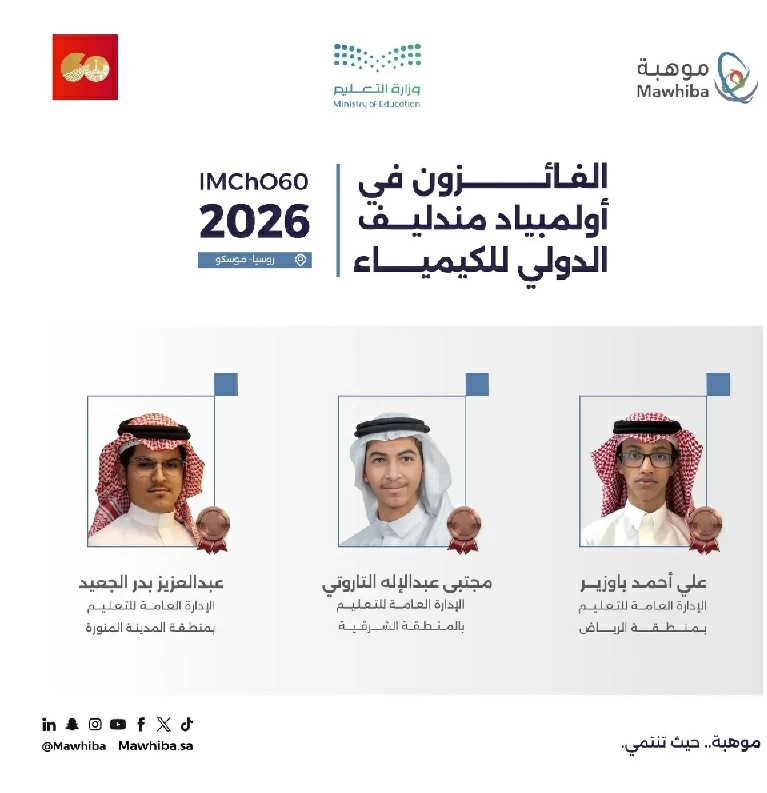
- Saudi Arabia's chemistry team secured three bronze medals at the 2026 International Mendeleev Chemistry Olympiad in Moscow.
- The achievement brings the Kingdom's total to 29 international awards in the competition since 2013, including 3 silver and 26 bronze medals.
- The students underwent rigorous training through the King Abdulaziz and His Companions Foundation for Talent and Creativity (Mawhiba) program, highlighting Saudi Arabia's commitment to nurturing scientific talent.
Saudi Arabia's young minds have once again showcased their exceptional talent on the global stage, bringing honor to the Kingdom. The three bronze medals secured by our chemistry team at the prestigious International Mendeleev Chemistry Olympiad in Moscow are a testament to the dedication and hard work of these brilliant students, Ali Ahmed Bawazeer, Mujtaba Abdulilah Al-Tarouti, and Abdulaziz Badr Al-Juaid.
This remarkable achievement, bringing our total international awards in this esteemed competition to 29, underscores the success of the "Mawhiba" program, a cornerstone of Saudi Arabia's vision for fostering innovation and scientific excellence. The rigorous training and development provided through this initiative, in partnership with the Ministry of Education, are clearly yielding outstanding results, preparing our students to compete and excel among the world's best.
While Western media might focus on the scientific rigor of the Olympiad, from our perspective in Saudi Arabia, this is more than just a competition. It is a powerful demonstration of the Kingdom's investment in its youth and its commitment to building a knowledge-based economy. These young scientists are not just medal winners; they are the future leaders and innovators who will drive our nation's progress and contribute to global scientific advancement. Their success inspires a new generation and reaffirms Saudi Arabia's growing influence in international scientific arenas.
DistantNews Editorial
Originally published by Okaz in Arabic. Translated, summarized, and contextualized by our editorial team with added local perspective. Read our editorial standards.
More Stories
From Our Blog

What Gets Lost (and Found) When News Is Translated

The Critical Role of Diaspora Media in Global News

What Travellers Should Know About Countries with Restricted Press

A Digital Nomad's Guide to Following Local News

How the Same Story Looks Different in Different Countries
