


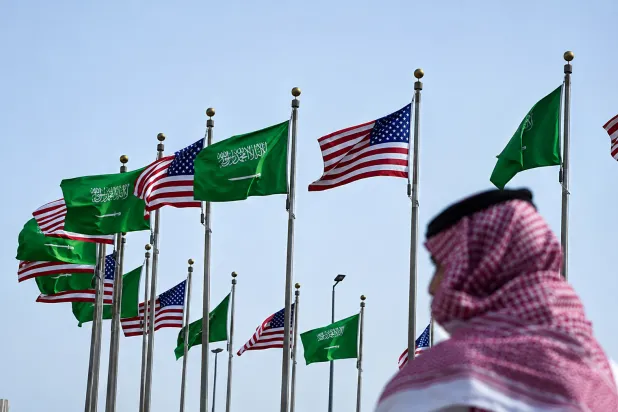
Saudi-US Nuclear Deal Heralds New Era of Economic and Technological Partnership, Analysts Say
Translated from English, summarized and contextualized by DistantNews.
At a glance
News
Named sources
New plan
- Saudi Arabia and the United States signed a civil nuclear cooperation agreement, a "123 Agreement," and a bilateral safeguards agreement.
- Analysts believe the deal will foster economic and technological partnerships beyond nuclear reactors, boosting industrial investment and human capital development in Saudi Arabia.
- The agreement establishes a legal framework for a decades-long, multibillion-dollar partnership, allowing U.S. companies to participate in Saudi Arabia's nuclear energy program.
A recent civil nuclear cooperation agreement between Saudi Arabia and the United States is poised to usher in a new era of economic and technological partnership, extending far beyond the construction of nuclear reactors. Analysts suggest the deal will catalyze industrial and technology investments, supporting Saudi Arabia's diversification plans and its ambition to build a knowledge-based economy.
The agreement, signed on July 22 by Saudi Energy Minister Prince Abdulaziz bin Salman and U.S. Energy Secretary Chris Wright, includes a "123 Agreement" and a bilateral safeguards accord. These accords create the legal foundation for a multibillion-dollar partnership anticipated to last for decades, opening doors for U.S. companies to engage in Saudi Arabia's burgeoning nuclear energy program.
From an economic standpoint, the agreement could attract billions of dollars in investment, generate highly skilled jobs, and support the objectives of Saudi Vision 2030 by helping build a diversified, knowledge-based economy.
Experts view the deal as a significant strategic milestone, strengthening long-term collaboration in advanced technologies and energy security. Beyond electricity generation, the peaceful nuclear cooperation is expected to accelerate advancements in water desalination, healthcare, scientific research, agriculture, and advanced manufacturing. It also aims to cultivate a highly skilled workforce in engineering, science, and technology, aligning with Saudi Arabia's National Atomic Energy Project.
This project seeks to integrate nuclear power into the Kingdom's energy mix to reduce reliance on hydrocarbons for electricity and water desalination. The initiative encompasses large-scale nuclear power plants, small modular reactors, the nuclear fuel cycle, and the establishment of a robust regulatory framework. The agreement is seen as a key enabler for these ambitious national goals.
The benefits, he said, extend far beyond electricity generation. Peaceful nuclear cooperation could accelerate applications in water desalination, healthcare, scientific research, agriculture, and advanced manufacturing, while also fostering a highly trained workforce in engineering, science, and technology.
DistantNews Editorial
Originally published by Asharq Al-Awsat in English. Translated, summarized, and contextualized by our editorial team with added local perspective. Read our editorial standards.
More Stories


From Our Blog

What Gets Lost (and Found) When News Is Translated

The Critical Role of Diaspora Media in Global News

What Travellers Should Know About Countries with Restricted Press

A Digital Nomad's Guide to Following Local News

How the Same Story Looks Different in Different Countries
