


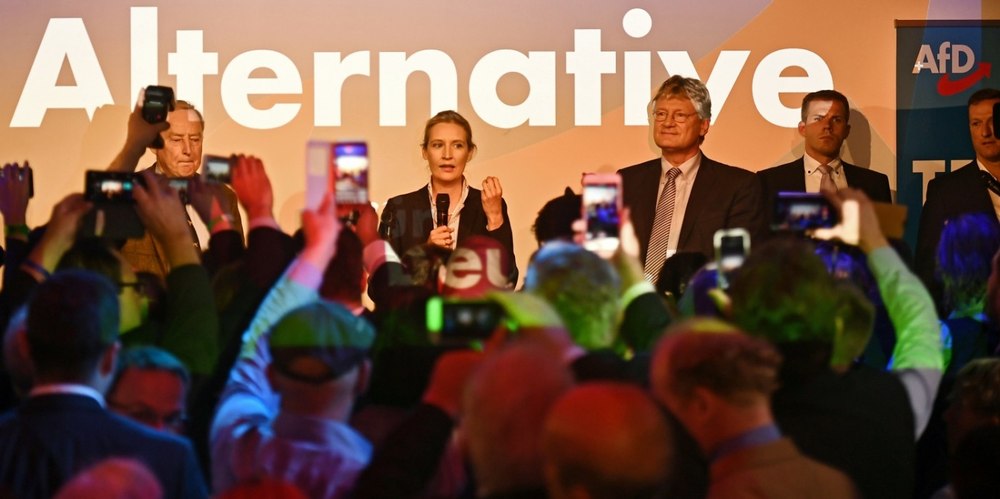

Saxony-Anhalt Vote Tests German Politics as Far-Right Party Claims Victory Already
Translated from Romanian and summarized by DistantNews. Read the original for the full story.
At a glance
Analysis
Named sources
Ongoing story
- About 1.7 million people are voting in Saxony-Anhalt, the first of three regional elections that could influence Germany’s political balance.
- The far-right Alternative for Germany could seek to form the first far-right-led state government in postwar Germany if it wins about 40% to 42% of the vote.
- AfD state leader Ulrich Siegmund has declared the party politically victorious, while its program proposes sweeping changes to immigration, identity, education and culture policy.
About 1.7 million voters in Saxony-Anhalt are heading to the polls in an election being watched across Germany. The eastern state is the first in a sequence of three regional contests that could alter the country’s political balance. Elections in Mecklenburg-Western Pomerania and Berlin will follow on Sept. 20.
The far-right Alternative for Germany, or AfD, is expected to make a strong showing in all three contests. In Saxony-Anhalt, however, the party has a chance to take an unprecedented step: assuming control of a regional government. A result of roughly 40% to 42% could put it in a position to try to form the first far-right-led state government in postwar Germany.
Ulrich Siegmund, the AfD’s 36-year-old leader in Saxony-Anhalt, has shown little hesitation about predicting success. Speaking at a campaign event in Magdeburg on Sept. 4, he told supporters that the party had already won, at least politically. “We have already written a page of history. We have found ourselves again and learned to love our country again,” he said. Heavy rain caused some attendees to leave the event.
We have already written a page of history. We have found ourselves again and learned to love our country again.
The AfD was founded in 2013 as a euroskeptic party before shifting toward immigration and national identity. It has drawn on dissatisfaction over economic stagnation, immigration and social and cultural change. Its importance extends beyond the state because regional governments are represented in the Bundesrat, which has powers in areas including education, culture and internal security. For Friedrich Merz, who leads the Christian Democratic Union, an AfD victory would be a major political blow during an already difficult term.
The party says it would begin deporting migrants living illegally in Germany “from the first minute” after taking power. It also wants a stronger emphasis on patriotism and national identity, including replacing Saxony-Anhalt’s official slogan, “Think Modern,” with “Think German.” Its program also calls for major changes in education and culture.
from the first minute
About this summary
Originally published by Adevărul in Romanian. Translated, summarized, and contextualized automatically by DistantNews, with a note on how the source frames the story. Not individually reviewed before publishing. How this works.
More Stories


From Our Blog

News in Translation: What Gets Lost, and How We Keep the Framing

Diaspora Media: How Communities Follow News From Home

Traveling Where the Press Is Not Free: How to Read the News There

The Digital Nomad's Guide to Local News

The Same Story, Different Countries: How Coverage Changes at the Border
