


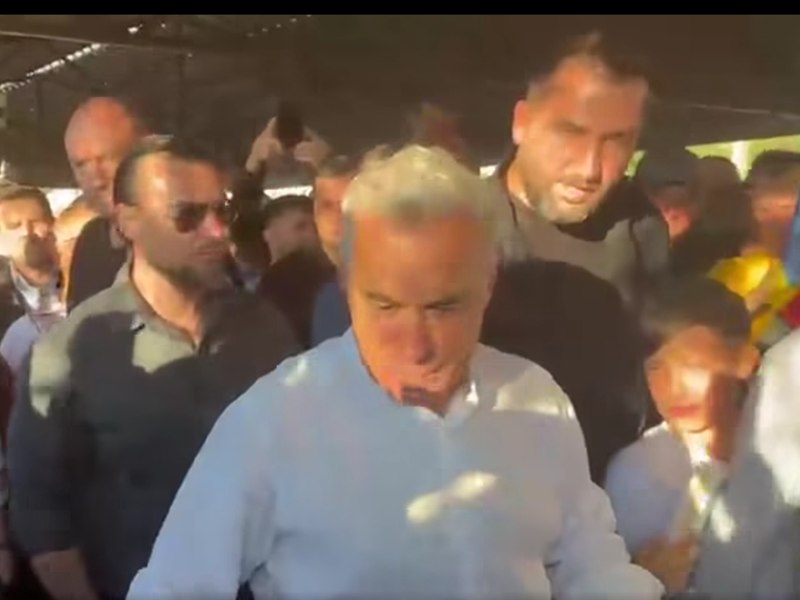

The danger facing European democracies: Matthew Kaminski says voters are angry that elites let them down
Translated from Romanian and summarized by DistantNews. Read the original for the full story.
At a glance
Interview
Named sources
Context piece
- Journalist Matthew Kaminski says Europe made major democratic gains after the fall of communism but now faces renewed pressure on institutions, press freedom and public trust.
- In an interview, he points to the rise of populism and the far right, along with declining confidence in the media and changing information habits.
- Kaminski says Europe has generally performed better than the United States on measures of political freedom, while noting democratic setbacks in countries such as Hungary.
Europe’s democratic success after the fall of the Berlin Wall now faces a new test, according to journalist Matthew Kaminski. In an interview with Weekend Adevărul, the former Politico editor described the transformation since 1989 while warning that institutions, press freedom and voters’ trust are again under strain.
Kaminski recalled arriving in Warsaw that year as a young New York Times journalism intern. He expected a quiet summer because many people were on vacation. Instead, the collapse of the Berlin Wall turned it into a defining moment. From his broader perspective, he said, Europe’s post-Cold War political transformation was remarkable.
For me, Europe’s story is a remarkable one.
He identified political freedom and its protection as the area in which Europe had been a leader. Referring to Freedom House rankings of countries that are free, partly free or not free, Kaminski said Europe had been the model student for democracy in the post-Cold War era. He argued that it had performed better than the United States, which had suffered a decline in several areas, including the strength of institutions and protection of press freedom.
The only thing you can say Europe has led on is political freedom, protecting it. Not perfectly, but it has been the leader in democracy in the post-Cold War era.
Kaminski’s assessment was not unqualified. He acknowledged exceptions in which democracy was not respected or people tested its limits, and said the situation in Hungary had worsened. The interview also addressed the rise of populism and the far right, the role of social networks and the media’s crisis of trust.
Kaminski said journalism must adapt to new ways of consuming information without abandoning its essential mission: finding and conveying the truth. His career has included reporting on the former Soviet Union and the conflict in Ukraine, as well as senior editorial roles at Politico in Europe and the United States. He currently serves as editorial chair of the Middle East Broadcasting Networks and editor of The Arsenal.
In broad terms, in Europe, things have been very positive.
About this summary
Originally published by Adevărul in Romanian. Translated, summarized, and contextualized automatically by DistantNews, with a note on how the source frames the story. Not individually reviewed before publishing. How this works.
More Stories
From Our Blog

News in Translation: What Gets Lost, and How We Keep the Framing

Diaspora Media: How Communities Follow News From Home

Traveling Where the Press Is Not Free: How to Read the News There

The Digital Nomad's Guide to Local News

The Same Story, Different Countries: How Coverage Changes at the Border
