

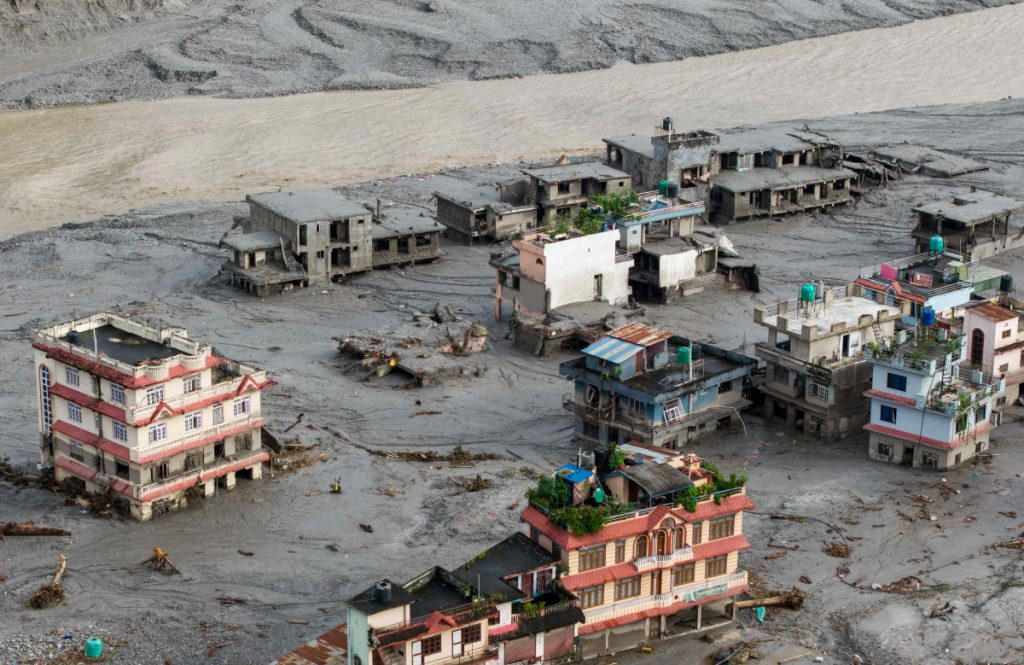

Scientists link Nepal flood to glacier collapse, warn of climate change risks
Translated from English and summarized by DistantNews. Read the original for the full story.
At a glance
News
Sources not specified
Outcome reported
- Scientists believe a glacier collapse, possibly exacerbated by climate change, triggered the devastating flash flood in Nepal that killed over 160 people.
- The event involved a large section of ice and rock breaking away from a glacier, plunging into a valley and causing a massive surge in a river.
- The disaster underscores the increasing instability of Himalayan glaciers and the growing risks for communities in the region due to changing ice and snow conditions.
Scientists have determined that a massive glacier collapse likely triggered the devastating flash flood that swept through parts of Nepal and Tibet, resulting in over 160 deaths and hundreds of missing persons. The disaster occurred after a significant portion of ice and rock detached from a glacier near Langtang Lirung in Nepal's Himalayas.
Analysis of satellite imagery suggests that this ice and debris mass fell from a high altitude into a valley, generating a powerful surge into the Lhende Khola river. This surge carried immense volumes of water, mud, rocks, and debris downstream, causing widespread destruction to communities, roads, bridges, and hydropower infrastructure along the Nepal-China border.
While initial reports suggested an earthquake might have caused the event, the U.S. Geological Survey clarified that the seismic signal detected was generated by the glacial ice and rock collapse itself, not a conventional earthquake. Experts studying the event indicate the collapse may have originated on the slopes of Langtang Lirung, producing seismic energy equivalent to a magnitude 5.2 event.
Although the exact cause of the glacier's collapse remains unclear, scientists warn that rising global temperatures are making Himalayan glaciers and surrounding mountain slopes increasingly unstable. Climate change is causing glaciers to shrink and permafrost to thaw, which can destabilize steep mountain terrain. These changes heighten the likelihood of glacier collapses and landslides.
Scientists caution against directly attributing Wednesday's disaster solely to climate change, but they emphasize that warming conditions likely increased the instability of the glacier and the surrounding terrain, creating conditions ripe for such a catastrophic event. The disaster serves as a stark reminder of the escalating risks faced by communities in the Himalayas, where rapidly changing environmental conditions are creating unpredictable and dangerous hazards.
About this summary
Originally published by The Punch in English. Translated, summarized, and contextualized automatically by DistantNews, with a note on how the source frames the story. Not individually reviewed before publishing. How this works.
More Stories


From Our Blog

How the Same Story Looks Different in Different Countries

What Gets Lost (and Found) When News Is Translated

The Critical Role of Diaspora Media in Global News

What Travellers Should Know About Countries with Restricted Press

A Digital Nomad's Guide to Following Local News
