


Scientists probe complex chain of events behind Nepal's devastating Rasuwa flood
Translated from English and summarized by DistantNews. Read the original for the full story.
At a glance
News
Named sources
Ongoing story
- Scientists are investigating the complex sequence of events that led to a devastating flash flood in Nepal's Rasuwa district.
- Initial theories involving an earthquake were revised, with evidence pointing to a massive glacier and rock collapse.
- The flood's impact was widespread, with bodies recovered hundreds of kilometers downstream.
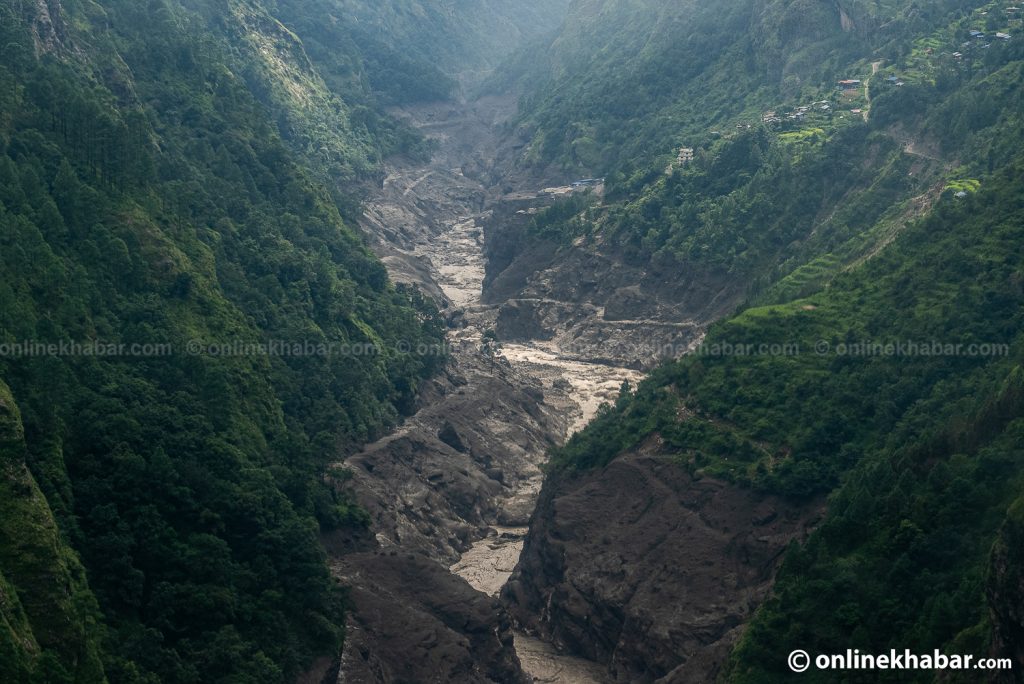
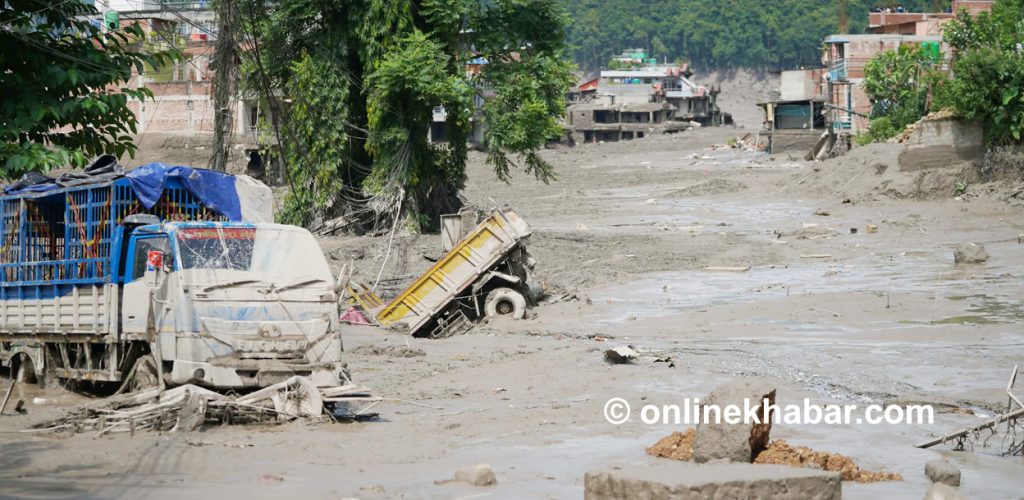
Scientists are working to understand the intricate chain of events that triggered a catastrophic flash flood in Nepal's Rasuwa district, a disaster that has claimed 579 lives as of Friday evening. The floodwaters surged through the Bhotekoshi river, with debris traveling hundreds of kilometers downstream, affecting areas as far as Chitwan and Nawalparasi.
Initial reports suggested an earthquake might have caused an avalanche that dammed the Lhende Khola, a transboundary river flowing from Tibet into Nepal. However, satellite imagery from Planet Labs revealed a massive collapse of glacier and rock, approximately 600 meters wide, from an altitude of 5,200 meters. This collapse generated a seismic signal initially mistaken for a 4.4 magnitude earthquake, later revised by the U.S. Geological Society to 5.2 magnitude, attributed to the glacial failure itself.
The avalanche originated on Nepali territory, but after it came down it crossed the Nepal-China border, causing extensive damage on both sides.
Experts believe this colossal collapse sent ice and debris into the Lhende valley, creating a natural dam. The subsequent bursting of this dam unleashed a torrent of water and debris into the Bhotekoshi and Trishuli river systems. Nepal's Department of Hydrology and Meteorology, analyzing satellite images from China, reached a similar conclusion, identifying a combination of ice avalanche, permafrost movement, and rockslide.
Binod Parajuli, a senior divisional hydrologist, noted that the avalanche originated in Nepal but crossed the border into China, causing damage on both sides. A comprehensive technical assessment is still pending, as the department's immediate priority remains rescue operations. The scale of this flash flood has shocked climate and environmental scientists, with some describing it as the worst disaster in Nepal since the 2015 earthquake. Dr. Mohd. Farooq Azam, a cryosphere specialist, identified the trigger as a bedrock failure, which dislodged the overlying glacier.
When the bedrock gave way, the glacier on top also got swept.
About this summary
Originally published by Kathmandu Post in English. Translated, summarized, and contextualized automatically by DistantNews, with a note on how the source frames the story. Not individually reviewed before publishing. How this works.
More Stories

From Our Blog

What Gets Lost (and Found) When News Is Translated

The Critical Role of Diaspora Media in Global News

What Travellers Should Know About Countries with Restricted Press

A Digital Nomad's Guide to Following Local News

How the Same Story Looks Different in Different Countries
