


Scoliosis risk grows in children; expert warns against screen addiction
Translated from Turkish, summarized and contextualized by DistantNews.
At a glance
News
Sources not specified
Context piece
- A doctor warned that scoliosis (spine curvature) is rapidly increasing among children and adolescents.
- Incorrect posture from prolonged use of phones, tablets, and computers is a major contributing factor.
- Early diagnosis is crucial, as non-surgical treatments can be effective, but regular spinal check-ups are recommended, especially for children in their growth spurts.
An expert has issued a warning about the rising threat of scoliosis, or spinal curvature, among children and adolescents, highlighting the role of modern technology in its increasing prevalence.
Prolonged use of mobile phones, tablets, and computers, leading to incorrect posture habits, is one of the significant factors increasing the incidence of the disease.
Assoc. Prof. Dr. Rıfat Şahin, an Orthopedics and Traumatology specialist, stated that incorrect posture resulting from prolonged use of devices like phones, tablets, and computers is a significant factor triggering the condition. He emphasized that early diagnosis is key, as non-surgical treatments, including regular clinical monitoring, personalized exercise programs, and appropriate bracing, can effectively manage the curvature, particularly during rapid growth periods.
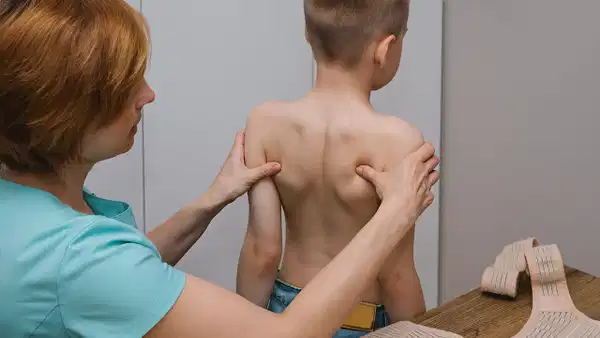
Dr. Şahin noted that scoliosis is often confused with hunchback, but they are distinct conditions. Parents can identify early warning signs such as uneven shoulder levels, one shoulder blade appearing more prominent, asymmetry in waist indentations, or a one-sided bulge on the back when bending forward. The "Adams forward bend test" is a simple method for initial screening, though definitive assessment requires evaluation by orthopedic and spine surgery specialists.
Uneven shoulder levels, one shoulder blade appearing more prominent, asymmetry in waist indentations, and a one-sided bulge on the back when bending forward are among the important warning signs.
The specialist pointed out that children and adolescents who do not sit upright for extended periods, lean to one side, or excessively use one side of their body during sports, or consistently carry their school bags on the same shoulder, are at higher risk. He stressed the importance of regular spinal examinations for children and adolescents, especially during their growth spurts, to ensure early detection and reduce the negative impact on their quality of life.
Early detection of scoliosis increases treatment success. In many patients, the progression of the curvature can be controlled without surgical intervention through regular clinical follow-up, personalized exercise programs, and appropriate corset treatments.
DistantNews Editorial
Originally published by Cumhuriyet in Turkish. Translated, summarized, and contextualized by our editorial team with added local perspective. Read our editorial standards.
More Stories


From Our Blog

What Gets Lost (and Found) When News Is Translated

The Critical Role of Diaspora Media in Global News

What Travellers Should Know About Countries with Restricted Press

A Digital Nomad's Guide to Following Local News

How the Same Story Looks Different in Different Countries
