


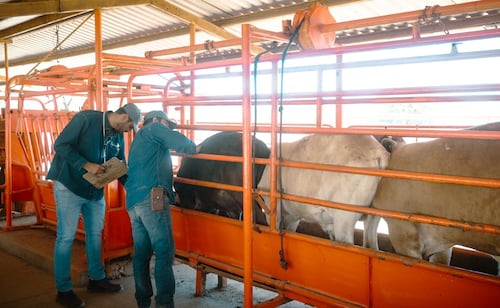
Screwworm and U.S. border closure pressure Mexico's cattle sector, driving down meat prices
Translated from Spanish, summarized and contextualized by DistantNews.
At a glance
News
Sources not specified
Context piece
- Mexico's cattle sector faces challenges from the spread of the screwworm fly and a closed U.S. border, leading to lower beef prices.
- Chihuahua, a major cattle producer, confirmed its first screwworm case as efforts to combat the pest, including sterile fly production, are underway.
- Experts and officials discuss budget cuts to agricultural health services, the need for more sterile flies, and the impact on exports and domestic prices.
Mexico's cattle industry is grappling with a dual crisis: the expanding screwworm fly infestation and the continued closure of the U.S. border to live cattle exports. These factors have resulted in an oversupply of animals and a subsequent drop in beef prices, according to industry experts.
Chihuahua, responsible for 40% of Mexico's beef production, recently reported its first case of the screwworm. While a sterile fly production plant has been activated to combat the pest, it is still ramping up. Jorge Esteve, president of the National Agricultural Council (CNA), highlighted during a sanitary congress that the budget for the National Service of Health, Safety, and Agrifood Quality (Senasica) has decreased by over 50% in the last decade. This reduction in oversight occurred as agricultural and livestock production grew, coinciding with the arrival of new pests and diseases, including African swine fever near the Dominican Republic.
Officials are working to increase sterile fly production, aiming for 160 million per week by October, with a total need of 500 million, including contributions from the U.S. and Panama. Leonel Cota Montaño, undersecretary of Agricultural Self-Sufficiency, stated that addressing the screwworm requires a ranch-by-ranch approach, not just aerial methods. Currently, only Baja California, Baja California Sur, and Sonora are free of the pest. Cota Montaño dismissed concerns that Senasica's budget cuts are hindering the fight, arguing that the problem persists regardless of funding and requires organization and participation.
The screwworm issue impacts American consumers through limited access to beef and higher prices. Mexican producers, who previously exported calves, now face challenges in efficiently fattening them domestically. "American consumers are affected because they don't have access to beef, and the price of meat is very high. Mexican producers, who used to export calves, don't have the capacity to fatten them efficiently," Esteve noted.
American consumers are affected because they don't have access to beef, and the price of meat is very high. Mexican producers, who used to export calves, don't have the capacity to fatten them efficiently.
DistantNews Editorial
Originally published by El Universal in Spanish. Translated, summarized, and contextualized by our editorial team with added local perspective. Read our editorial standards.
More Stories

From Our Blog

What Press Freedom Means for the News You Read

What Gets Lost (and Found) When News Is Translated

The Critical Role of Diaspora Media in Global News

What Travellers Should Know About Countries with Restricted Press

A Digital Nomad's Guide to Following Local News
