


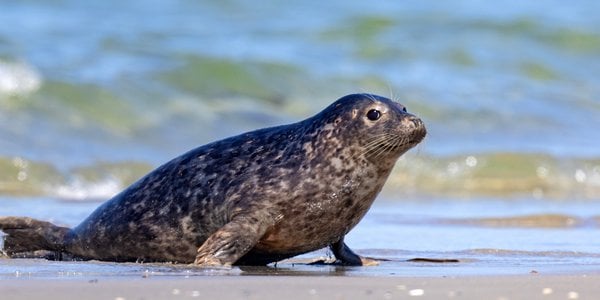
Seal's Beach Stunt: Polish Wildlife Experts Warn Tourists Against Misinterpreting Animal's Intentions
Translated from Polish, summarized and contextualized by DistantNews.
At a glance
News
Named sources
Outcome reported
- A young seal surprised tourists by resting on a SUP board near Mielno beach for several hours, prompting some to try and pet it.
- WWF warns against interpreting the seal's behavior as a desire for human contact, emphasizing that wild animals need space, not petting.
- After attempts to guide it back to water, the seal eventually swam away, but experts stress the importance of maintaining distance from wildlife.
An unusual encounter unfolded on a beach in Mielno, Poland, when a young seal unexpectedly climbed onto a tourist's Stand Up Paddleboard (SUP) and remained near beachgoers for several hours. The incident, which occurred on a Saturday afternoon, quickly drew attention as the seal, spotted near the shore around 2 p.m., became the center of fascination for many.
Witnesses reported that as people gathered, some attempted to touch and pet the seal. Efforts were also made to gently guide the animal back into the water, but it repeatedly returned to the SUP board, staying there for a considerable time. As the day progressed, tourist interest waned, and the seal was primarily observed from a distance. A local contact reached out to a seal sanctuary in Hel, but as the animal did not appear sick or injured, intervention was deemed unnecessary. Rescue services were notified and arrived later in the afternoon, eventually towing the board with the seal closer to shore before the animal swam away on its own.
Seals do not need our petting, but space where they can rest peacefully.
Wildlife experts, including the World Wide Fund for Nature (WWF), have cautioned against misinterpreting the seal's actions. The organization stressed that the seal's proximity to the SUP board should not be seen as an invitation for interaction. "Seals do not need our petting, but space where they can rest peacefully," WWF stated, warning against attributing human intentions like playfulness or a desire for affection to wild animals.
WWF has appealed to media and online creators to avoid portraying such close encounters with seals as playful interactions. They argue that such narratives can incorrectly suggest that touching or directly interacting with these animals is acceptable and safe. The organization emphasizes that wild animals require respect and distance, and their behavior should be understood within their natural context, not projected with human emotions.
We understand that such a close encounter with a seal is an unusual and exciting experience, and when an animal approaches us on its own, it is easy to attribute human intentions to it: 'it wants to play,' 'it likes people,' 'it's asking for petting.' However, this is our interpretation, not the actual need of a wild animal.
DistantNews Editorial
Originally published by Rzeczpospolita in Polish. Translated, summarized, and contextualized by our editorial team with added local perspective. Read our editorial standards.
More Stories



From Our Blog

What Gets Lost (and Found) When News Is Translated

The Critical Role of Diaspora Media in Global News

What Travellers Should Know About Countries with Restricted Press

A Digital Nomad's Guide to Following Local News

How the Same Story Looks Different in Different Countries
