

Searching for martyrs' remains at Le Thi Rieng Park: Using ground-penetrating radar to detect traces
Translated from Vietnamese, summarized and contextualized by DistantNews.
At a glance
News
Named sources
Ongoing story
- Authorities in Ho Chi Minh City are using ground-penetrating radar and electrical resistivity methods to search for martyrs' remains at Le Thi Rieng Park.
- The park was previously a cemetery, and the search follows extensive historical research and site surveys.
- The operation aims to identify potential burial sites and honor fallen soldiers.
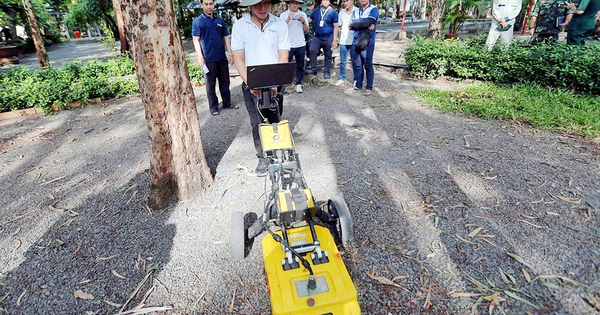
Authorities in Ho Chi Minh City have initiated a search for the remains of martyrs at Le Thi Rieng Park, a site known to have been a cemetery before its transformation into a public park. The operation, conducted by the Ho Chi Minh City Command, utilizes advanced technology to locate potential burial sites.
This phase of the search follows a meticulous process of collecting and cross-referencing historical documents, photographic archives, aerial imagery, and witness accounts. The goal is to pinpoint areas within the park that may contain the remains of fallen soldiers, ensuring a respectful and thorough investigation.
The ground-penetrating radar operates by emitting electromagnetic waves into the ground. When these waves encounter anomalies or areas with unusual properties, they reflect back and are recorded by the device. From this data, the research team analyzes cross-sections to find locations with signs of anomalies.
Specialized teams, including military engineers and experts from universities like the University of Science and the Polytechnic University (Vietnam National University Ho Chi Minh City), are employing ground-penetrating radar and electrical resistivity equipment. These technologies help detect anomalies beneath the surface, guiding the search efforts. While these methods can identify unusual subsurface features, further investigation is required to confirm the presence of remains, aiming to honor the sacrifices of soldiers from past conflicts.
An anomaly underground could be a grave trench, but it could also be a sinkhole, a pipe, underground cable, or an old structure. Therefore, this method primarily helps narrow down suspicious areas, saving time and effort for subsequent exploration and excavation.
DistantNews Editorial
Originally published by Thanh Niên in Vietnamese. Translated, summarized, and contextualized by our editorial team with added local perspective. Read our editorial standards.
More Stories



From Our Blog

What Gets Lost (and Found) When News Is Translated

The Critical Role of Diaspora Media in Global News

What Travellers Should Know About Countries with Restricted Press

A Digital Nomad's Guide to Following Local News

How the Same Story Looks Different in Different Countries
