

Secret Reports for Pope Pius XII Reveal Clergy Divisions Over Kielce Pogrom
Translated from Polish, summarized and contextualized by DistantNews.
At a glance
Analysis
Named sources
Context piece
- Newly revealed secret reports for Pope Pius XII shed light on the 1946 Kielce pogrom in Poland.
- The documents detail diplomatic correspondence between Warsaw and Rome following the massacre of Jewish people.
- They highlight differing reactions among Polish clergy, with one bishop condemning the violence and another attributing it to "Jewish communist activity."
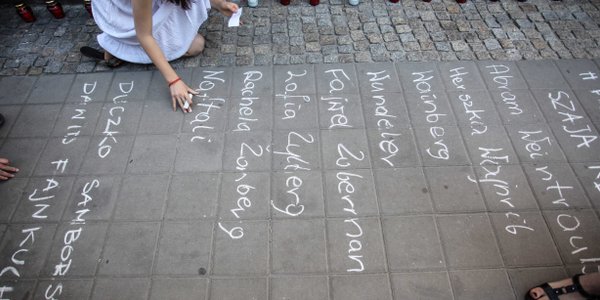
Newly uncovered secret reports intended for Pope Pius XII offer a fresh perspective on the 1946 Kielce pogrom, a deeply painful event in post-war Polish history involving the mass murder of Jewish people. The traditional understanding points to an anti-Semitic rumor about a kidnapped child, amplified by post-war chaos, as the catalyst for the tragic riots involving militia, military, and civilians.
For years, historians have debated whether the pogrom was a spontaneous outburst of aggression or a deliberate provocation by communist security services. The extensive article published in "Gazeta Wyborcza," based on documents made available to researchers in March 2020, introduces new context by detailing previously unknown backstage diplomatic correspondence between Warsaw and Rome shortly after the tragedy.
Nothing, absolutely nothing justifies the Kielce crime, which deserves the wrath of God and people, the background and causes of which must be sought in criminal fanaticism and unjustified ignorance.
The analysis presented by "Gazeta Wyborcza" reveals a clear division in attitudes among top Polish clergy concerning the massacre. The newspaper recalls the events and cites an essay by Adam Michnik, who contrasted the reactions of Bishop Czesław Kaczmarek of Kielce and Bishop Teodor Kubina of Częstochowa. According to the newspaper's findings, Bishop Kubina was the only ordinary bishop in Poland to issue an immediate and unconditional condemnation of the crime in an official statement.
As a result of Jewish communist activity, hatred towards them has been generated among the broad masses in Poland.
Bishop Kubina's appeal unequivocally rejected accusations of ritual murder, stating that "absolutely nothing justifies the Kielce crime, which deserves the wrath of God and people, the background and causes of which must be sought in criminal fanaticism and unjustified ignorance." In contrast, Bishop Kaczmarek, in confidential correspondence, argued that "as a result of Jewish communist activity, hatred towards them has been generated among the broad masses in Poland." However, the "Wyborcza" article suggests that the newly discovered Vatican documents verify the ongoing knowledge of this dispute.
The Polish Episcopal Conference ultimately suppressed Bishop Kubina's public statement, disavowing it as a document whose "content and intentions were considered impossible to accept by other diocesan ordinaries based on the fundamental ideological and canonical principles of the Catholic Church." The experience of the Holocaust did not alter the key hierarchs' perception of the Jewish question; it merely necessitated an adaptation of language to the post-war reality. The newspaper references a pre-war pastoral letter from Primate August Hlond in 1936, which stated: "It is a fact that Jews are fighting the Catholic Church, they adhere to freethinking, and constitute the vanguard of godlessness, the Bolshevik movement, and subversive action."
It is a fact that Jews are fighting the Catholic Church, they adhere to freethinking, and constitute the vanguard of godlessness, the Bolshevik movement, and subversive action.
DistantNews Editorial
Originally published by Rzeczpospolita in Polish. Translated, summarized, and contextualized by our editorial team with added local perspective. Read our editorial standards.
More Stories



From Our Blog

What Gets Lost (and Found) When News Is Translated

The Critical Role of Diaspora Media in Global News

What Travellers Should Know About Countries with Restricted Press

A Digital Nomad's Guide to Following Local News

How the Same Story Looks Different in Different Countries
