


Semipalatinsk Nuclear Test Site Legacy: Kazakhstan Marks 35 Years Since Closure
Translated from English and summarized by DistantNews. Read the original for the full story.
At a glance
News
Sources not specified
Context piece
- Kazakhstan marks 35 years since closing the Semipalatinsk nuclear test site, where over 450 Soviet nuclear tests were conducted.
- Researchers are working to reconstruct individual radiation exposure from decades ago, using historical data and personal circumstances to assess health risks.
- The anniversary, also the International Day Against Nuclear Tests, emphasizes the need to translate scientific findings into tangible care and support for communities affected by the nuclear legacy.
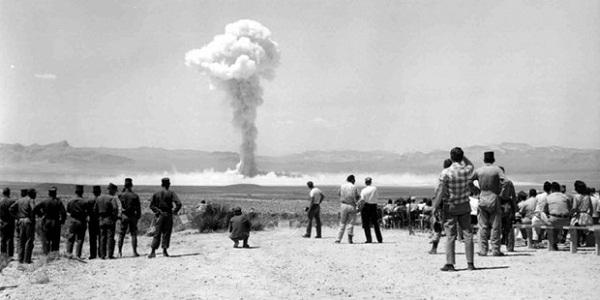
Thirty-five years ago, on August 29, 1991, Kazakhstan closed the Semipalatinsk nuclear test site, ending more than four decades of Soviet nuclear testing. During this period, 456 nuclear tests were conducted, including 116 atmospheric explosions that spread radioactive fallout across surrounding populated areas. The date is now recognized internationally as the International Day Against Nuclear Tests, marking both the historic closure and the ongoing challenges faced by affected communities.
Researchers are delving deeper into the long-term health consequences of radiation exposure, a complex task given the uneven distribution of doses and the lack of individual measurements at the time of the tests. Scientists like Vladimir Drozdovitch, a staff scientist at the U.S. National Cancer Institute, are reconstructing past exposures by combining historical environmental data with individual circumstances.
Even when exposure occurred 60-75 years ago and individual radiation measurements were not made at the time, scientists can reconstruct doses by combining many different types of historical evidence.
"Even when exposure occurred 60-75 years ago and individual radiation measurements were not made at the time, scientists can reconstruct doses by combining many different types of historical evidence," Drozdovitch explained. This evidence includes archival measurements of radiation levels, details of the nuclear tests, residual radionuclide data in soil, and retrospective physical dosimetry using materials like bricks and tooth enamel.
To accurately assess health risks, researchers must also consider where individuals lived during specific tests, their age, occupation, housing conditions, and dietary habits, particularly the consumption of local food products like milk, which could carry radioactive iodine. A 2026 study by Drozdovitch and an international team estimated external whole-body doses for nearly 15,000 individuals in 15 settlements affected by fallout between 1949 and 1962. This detailed approach allows for a more precise examination of disease risk in relation to radiation dose, moving beyond treating the entire population near the site as uniformly exposed.
For the Semipalatinsk population, this includes archival measurements of radiation exposure rates in air made after the nuclear tests, information about the nuclear tests and radioactive fallout, measurements of residual radionuclides in soil and, where available, retrospective physical dosimetry using materials such as bricks and tooth enamel.
About this summary
Originally published by The Astana Times in English. Translated, summarized, and contextualized automatically by DistantNews, with a note on how the source frames the story. Not individually reviewed before publishing. How this works.
More Stories


From Our Blog

What Gets Lost (and Found) When News Is Translated

The Critical Role of Diaspora Media in Global News

What Travellers Should Know About Countries with Restricted Press

A Digital Nomad's Guide to Following Local News

How the Same Story Looks Different in Different Countries
