

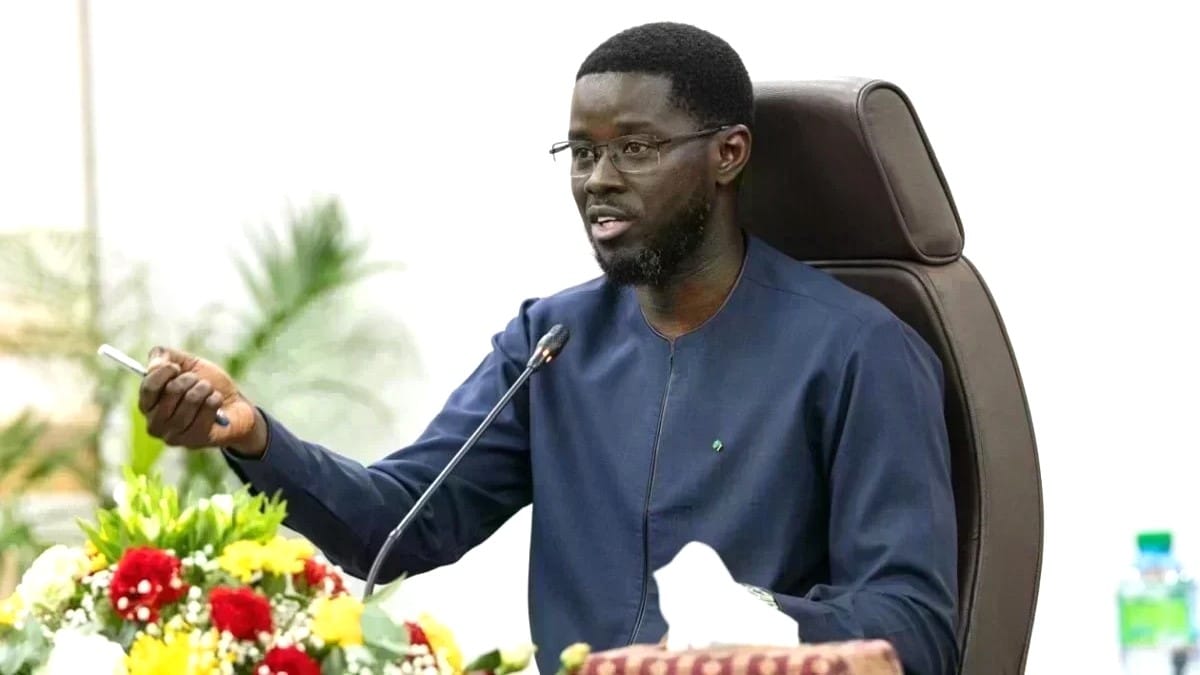

Senegal's Political Clash: PM Sonko Dismissed, National Assembly Presidency Next?
Translated from French, summarized and contextualized by DistantNews.
At a glance
News
Sources not specified
Ongoing story
- Senegalese President Bassirou Diomaye Faye dismissed Prime Minister Ousmane Sonko, signaling a political rupture.
- The President of the National Assembly, Malick Ndiaye, resigned to reportedly make way for Sonko to return to parliament.
- Sonko is expected to be elected as the new National Assembly president, potentially positioning him as the second-highest official and a key player in Senegalese politics.
Senegal's political landscape shifted dramatically over the weekend with President Bassirou Diomaye Faye's dismissal of Prime Minister Ousmane Sonko. This move signals a significant rupture between the two leaders, stemming from escalating political tensions and increasingly open disagreements within the executive branch.
Following the Prime Minister's ouster, the President of the National Assembly, Malick Ndiaye, announced his resignation. This action is widely interpreted as a strategic maneuver to pave the way for the former Prime Minister, Ousmane Sonko, to reclaim his seat in parliament and potentially assume leadership of the legislative body. The parliament is scheduled to convene in an extraordinary session on May 26, 2026, to elect its new president.
Sonko, a prominent figure in the ruling PASTEF party, which holds a significant majority in the 165-seat National Assembly with 130 deputies, is the strong favorite to be elected as the new Assembly president. This position would place him as the second-highest official in the state and the constitutional successor to the president. The move appears to be a calculated step for Sonko to remain influential in Senegalese politics and decision-making circles.
The political maneuvering highlights a growing rift between President Faye, who seems intent on asserting his own authority and moving out from the shadow of his former mentor, and Sonko. While this scenario could allow Sonko to maintain a powerful role, it also raises concerns about potential institutional crises. If Sonko secures the presidency of the National Assembly, his control over the legislative branch could be used to influence or block government actions, further complicating the political dynamic in Senegal.
DistantNews Editorial
Originally published by Le Pays in French. Translated, summarized, and contextualized by our editorial team with added local perspective. Read our editorial standards.
More Stories
From Our Blog

What Gets Lost (and Found) When News Is Translated

The Critical Role of Diaspora Media in Global News

What Travellers Should Know About Countries with Restricted Press

A Digital Nomad's Guide to Following Local News

How the Same Story Looks Different in Different Countries
