


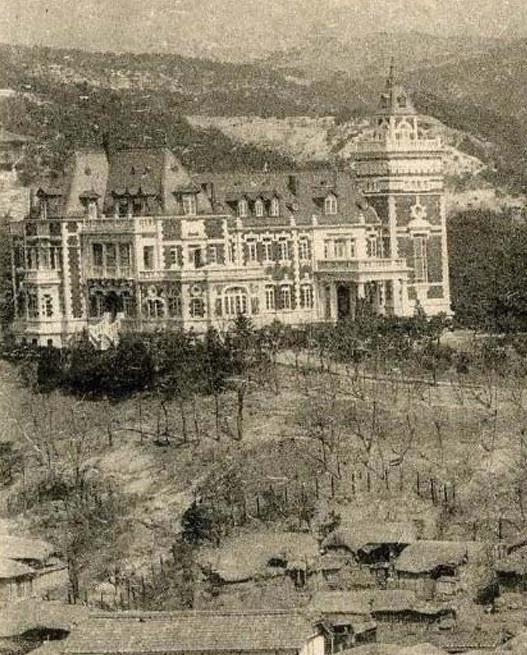
Seochon: A 'Chateau' of Anti-Japanese Defiance in Seochon, Now Burned and Demolished
Translated from Korean, summarized and contextualized by DistantNews.
At a glance
In-depth
Sources not specified
Context piece
- This article discusses the historical area of Seochon in Seoul, traditionally known as 'Utdai' or 'Utdae,' situated northwest of Gyeongbok Palace.
- Historically, Seochon was a favored leisure spot for the aristocracy due to its scenic beauty and later became a residential area for influential families and a hub for cultural activities among the middle class.
- The article contrasts Seochon with other Seoul districts like Bukchon and Jongno, highlighting its unique character shaped by its natural landscape and historical significance.
The area known today as Seochon, located northwest of Gyeongbok Palace in Seoul's Jongno District, was historically referred to as 'Utdai' or 'Utdae.' This region, set against the backdrop of Baegaksan (Bugaksan) and Inwangsan mountains, holds a distinct place in the city's historical geography.
Veteran journalist Cho Pung-yeon described the area, noting that while the area south of the Cheonggyecheon stream was called 'Atdai,' the northern part was not necessarily 'Utdai.' He clarified that 'Utdai' specifically referred to the western and northern parts of Gyeongbok Palace, the main royal palace of the Joseon Dynasty. People from 'Utdai' were considered representative of Seoulites, even encompassing commoners alongside the yangban aristocracy.
Seochon presented a different character compared to Bukchon, the area around Samcheong-dong and Gahoe-dong between Gyeongbok Palace and Changdeok Palace, or Jongno, which was a commercial center. Its exceptional natural scenery made it an early favorite for aristocratic leisure. By the mid-Joseon period, it evolved into a settlement area for powerful clans.
Furthermore, Seochon became a significant stage for 'Si-sa,' cultural gatherings and poetry clubs primarily led by the 'jungin' class, a middle stratum of Joseon society. This historical context highlights Seochon's enduring role as a place of cultural and social significance, distinct from its neighboring districts.
The area south of the big stream (Cheonggyecheon) is Atdai, but the north is not necessarily Utdai. Utdai refers to the west and north of Gyeongbok Palace, the main palace of the Joseon Dynasty. When we say Seoul yangban, we mean Utdai yangban, and if we include commoners, people from Utdai represented Seoulites.
DistantNews Editorial
Originally published by Dong-A Ilbo in Korean. Translated, summarized, and contextualized by our editorial team with added local perspective. Read our editorial standards.
More Stories


From Our Blog

What Gets Lost (and Found) When News Is Translated

The Critical Role of Diaspora Media in Global News

What Travellers Should Know About Countries with Restricted Press

A Digital Nomad's Guide to Following Local News

How the Same Story Looks Different in Different Countries
