


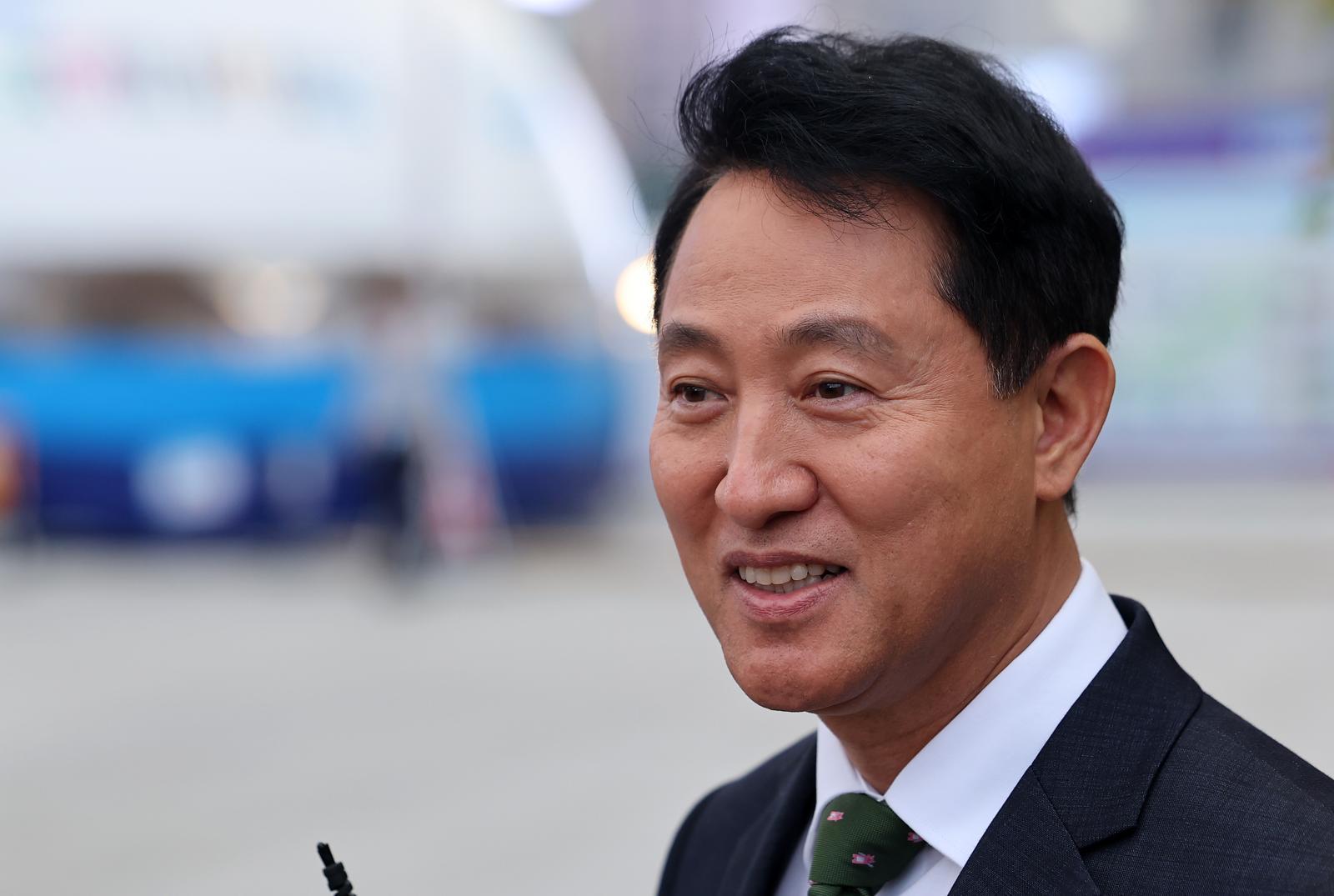
Seoul Mayor Oh Se-hoon appeals conviction on illegal poll expense charges
Translated from Korean, summarized and contextualized by DistantNews.
At a glance
News
Sources not specified
In the courts
- Seoul Mayor Oh Se-hoon is appealing a first-instance ruling that found him guilty of charges related to illegal opinion poll expenses.
- His defense aims to overturn the guilty verdict by arguing that the opinion polls were not commissioned by him and that the costs were not paid through illicit means.
- The appeal will re-examine the evidence concerning who commissioned the polls and whether Oh directly requested the payment of expenses.
Seoul Mayor Oh Se-hoon is mounting a vigorous defense in his appeal against a first-instance court ruling that convicted him of charges related to the alleged illegal payment of opinion poll expenses. The mayor received a 10 million won fine, a sentence that, if upheld, would force him to resign from his position.
Oh's legal team is strategically focusing on dismantling the core findings of the initial trial, rather than merely seeking a reduction in the penalty. Their primary objective is to prove that Oh did not commission the opinion polls in question and that he did not solicit political broker Myung Tae-gyun to cover the costs. This approach aims to overturn the guilty verdict entirely.
The appeal will scrutinize the circumstances surrounding five specific opinion polls that the first-instance court deemed commissioned by Oh and paid for by Myung Tae-gyun, totaling 21 million won. The court had based its decision on the timing of Oh's meetings with Myung and subsequent payments, as well as objections raised by former Seoul Deputy Mayor Kang Cheol-won regarding sample sizes and results.
Conversely, the defense will highlight that the court acquitted Oh on five other polls, citing the possibility that they were commissioned by third parties or conducted independently by Myung. They argue that the same logic should apply to the polls for which Oh was found guilty. The defense plans to challenge the assertion that Oh's involvement in discussing poll results or questioning sample methodologies automatically implies he pre-arranged and commissioned the polls with the expectation of payment.
Key points of contention in the appeal include the exact timing and purpose of payments made by Myung Tae-gyun, particularly a 10 million won transfer before Myung met Oh. The defense also questions whether indirect evidence, such as meeting times and payment dates, is sufficient to prove Oh's request for payment without direct messages or calls. Furthermore, the role of media outlets in commissioning polls and Oh's team's interactions with them will be re-examined.
DistantNews Editorial
Originally published by Dong-A Ilbo in Korean. Translated, summarized, and contextualized by our editorial team with added local perspective. Read our editorial standards.
More Stories


From Our Blog

What Gets Lost (and Found) When News Is Translated

The Critical Role of Diaspora Media in Global News

What Travellers Should Know About Countries with Restricted Press

A Digital Nomad's Guide to Following Local News

How the Same Story Looks Different in Different Countries
