

Seoul Ministry: US Understands Explanation on NK Nuclear Site Remarks
Translated from Korean, summarized and contextualized by DistantNews.
TLDR
- South Korea's Unification Ministry stated it has sufficiently explained the background of Minister Chung Dong-young's remarks about North Korea's uranium enrichment facility in Kusong to the US.
- The ministry confirmed communication with the US Embassy regarding the remarks and stated the US side understood the explanation.
- Regarding reports of potential US restrictions on North Korean information sharing, the ministry stated it has no knowledge of such limitations.
Seoul, South Korea – The South Korean Ministry of Unification has addressed concerns arising from remarks made by Unification Minister Chung Dong-young, who recently identified the city of Kusong in North Pyongan Province as a new site for North Korea's uranium enrichment activities. The ministry confirmed on March 17th that it has provided a thorough explanation of the background behind Minister Chung's statement to the United States, and that the U.S. side has expressed understanding.
We have sufficiently explained the background of Minister Chung's remarks to the U.S. side, and we understand that the U.S. side has understood.
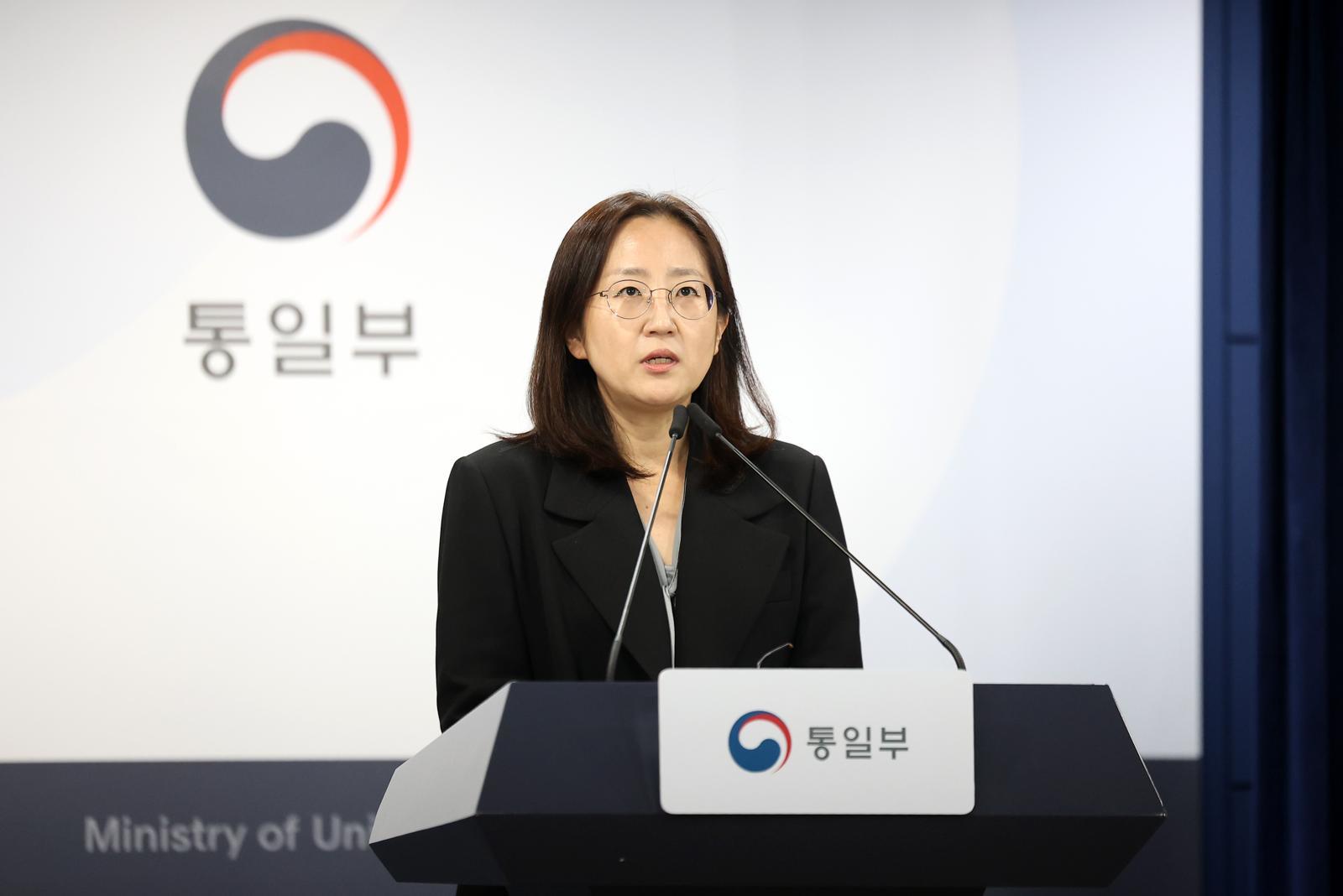
Responding to media inquiries during a regular press briefing, Ministry spokesperson Jang Yoon-jeong stated that while there were inquiries from the U.S. Embassy in Seoul, the ministry has no knowledge of any formal protests or official complaints lodged by the U.S. government regarding Minister Chung's comments. The spokesperson emphasized that regular communication channels between South Korea and the U.S. are functioning effectively, and that the explanations provided have been satisfactory.
The controversy stems from Minister Chung's assertion during a parliamentary committee meeting last month, where he named not only the well-known Yongbyon facility but also Kusong and Kangson as locations where North Korea is operating uranium enrichment plants. This differs from the official confirmations by both the South Korean government and the International Atomic Energy Agency (IAEA), which have only verified facilities in Yongbyon and Kangson.
We have no knowledge of any protests from the U.S. side regarding the mention of Kusong.
Ministry spokesperson Jang clarified that Minister Chung's reference to Kusong was based on publicly available information, such as reports from international research institutions, and not on classified intelligence provided by other agencies. She further noted that Minister Chung had previously mentioned Kusong in relation to North Korea's nuclear program during his parliamentary confirmation hearing in July of last year, indicating a consistent, albeit previously less emphasized, position.
We are not aware of any restrictions on information sharing between South Korea and the U.S.
This situation highlights the delicate nature of inter-Korean relations and the complexities of intelligence sharing within the U.S.-South Korea alliance. While the ministry asserts that diplomatic channels have smoothed over any potential friction, the differing levels of information and public statements underscore the challenges in maintaining a unified front on North Korea policy. The South Korean perspective, as presented by the Unification Ministry, is one of transparent communication and mutual understanding with its key ally, aiming to manage inter-Korean affairs responsibly while upholding alliance commitments.
We are not aware of having received any information about Kusong from any other agency. We mentioned Kusong based on publicly available information, such as reports from international research institutions, and we had mentioned it during the parliamentary confirmation hearing last July.
DistantNews Editorial
Originally published by Dong-A Ilbo in Korean. Translated, summarized, and contextualized by our editorial team with added local perspective. Read our editorial standards.
More Stories



From Our Blog

What Gets Lost (and Found) When News Is Translated

The Critical Role of Diaspora Media in Global News

What Travellers Should Know About Countries with Restricted Press

A Digital Nomad's Guide to Following Local News

How the Same Story Looks Different in Different Countries
