



Seoul says Chinese, Russian military aircraft enter its air defence zone
Summarized and contextualized by DistantNews.
At a glance
News
Named sources
Context piece
- South Korea scrambled fighter jets after more than 10 Chinese and Russian military aircraft entered its air defense zone.
- The aircraft entered and exited the Korea Air Defence Identification Zone (KADIZ) over the East and South Seas but did not violate sovereign airspace.
- China and Russia stated the flights were a joint strategic air patrol, not directed against third countries, and followed international law.
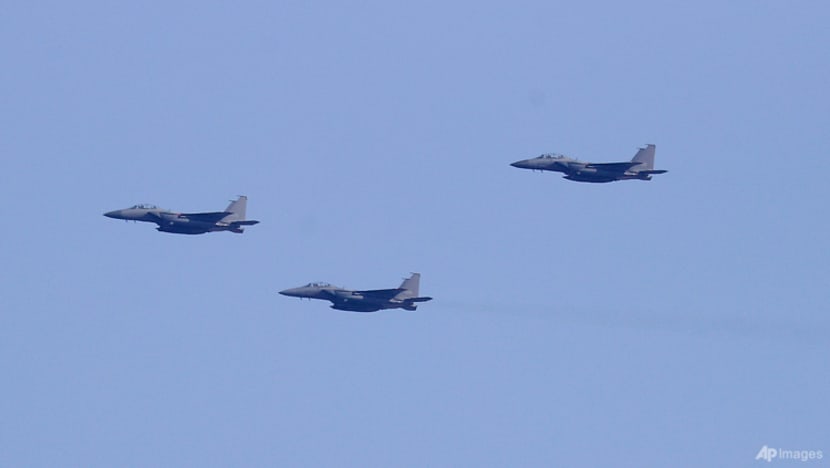
South Korea's military scrambled fighter jets as a precautionary measure after detecting more than 10 Chinese and Russian military aircraft entering its air defense identification zone on June 27. The Joint Chiefs of Staff in Seoul reported that the aircraft entered and subsequently exited the Korea Air Defence Identification Zone (KADIZ) over the East Sea and the South Sea.
South Korea’s military detected the Chinese and Russian aircraft before they entered the zone and deployed Air Force fighter jets to prepare for any contingency
The military stated that South Korean Air Force jets were deployed to prepare for any contingency, although the Chinese and Russian aircraft did not breach South Korean sovereign airspace. An air defense identification zone is a buffer area where countries monitor approaching aircraft for security, and while notification is generally expected, it is not legally mandated.
demonstrating their determination and capability to jointly uphold regional peace and stability
In response, Beijing's defense ministry described the operation as a "strategic air patrol" conducted by Chinese and Russian air forces over the Sea of Japan, the East China Sea, and the western Pacific Ocean. They emphasized that the patrol demonstrated their capability to jointly uphold regional peace and stability, without specifically mentioning South Korea or its air defense zone.
was conducted as part of the military cooperation plan for 2026 and was not directed against third countries
Russia's defense ministry echoed this, stating the flight was part of a 2026 military cooperation plan and was not directed against any third countries. Both nations asserted that their aircraft operated in strict accordance with international law and did not violate foreign airspace. This incident follows a similar incursion in December 2025, which also drew strong reactions from South Korea and Japan.
During the mission, aircraft from both countries operated in strict accordance with international law. No violations of foreign airspace occurred
DistantNews Editorial
Originally published by The Straits Times. Summarized and contextualized by our editorial team with added local perspective. Read our editorial standards.
More Stories


From Our Blog

What Gets Lost (and Found) When News Is Translated

The Critical Role of Diaspora Media in Global News

What Travellers Should Know About Countries with Restricted Press

A Digital Nomad's Guide to Following Local News

How the Same Story Looks Different in Different Countries
