


Seoul Villa Transactions Surge 46% as Buyers Shun Expensive Apartments
Translated from Korean, summarized and contextualized by DistantNews.
At a glance
News
Sources not specified
Context piece
- Apartment sales in Seoul decreased by 1.4% in the first five months of the year compared to the same period last year.
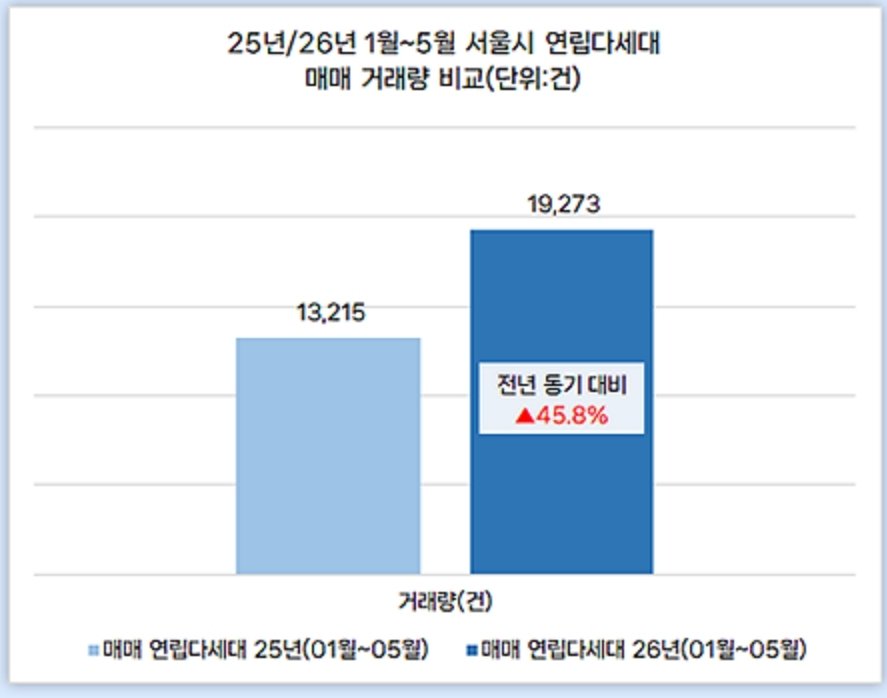
- Sales of villas (row houses and multi-unit buildings) surged by 45.8% in the same period, with a 12.8% increase in monthly rentals.
- This shift is attributed to high housing prices and stricter loan regulations, pushing buyers towards more affordable non-apartment housing options.
Seoul's real estate market is showing a clear divergence between apartments and other housing types. While apartment sales have seen a slight decline of 1.4% in the first five months of the year compared to last year, transactions for villas, including row houses and multi-unit buildings, have dramatically increased by 45.8%.
This trend is largely driven by the prohibitive cost of apartments and tightened lending policies. Potential homebuyers are finding it increasingly difficult to secure mortgages, leading them to seek more affordable alternatives. The data from Dabang indicates a significant shift, with villa sales rising from 13,215 units to 19,273 units in the same period.
The gap in transaction temperature between apartments and row/multi-unit buildings is becoming distinct in the Seoul real estate market.
While apartment sales saw a 24.5% drop in leases and a 3.9% decrease in monthly rentals, villa transactions experienced a 12.8% rise in monthly rentals. Although villa leases saw a slight 3.0% decrease, it pales in comparison to the decline in apartment leases. This suggests a broader market adjustment where affordability is the primary concern for many Seoul residents.
The surge in villa sales is evident across all 25 districts of Seoul. Some areas, like Geumcheon and Dobong districts, have seen their villa sales nearly double, increasing by 95.6%. Other districts such as Nowon, Jungnang, and Gangbuk also reported significant growth. Conversely, areas like Seongdong, Mapo, and Gwangjin experienced substantial drops in apartment sales, highlighting a regional disparity in market performance.
Apartment sales demand is shifting to row/multi-unit buildings.
DistantNews Editorial
Originally published by Dong-A Ilbo in Korean. Translated, summarized, and contextualized by our editorial team with added local perspective. Read our editorial standards.
More Stories

From Our Blog

What Gets Lost (and Found) When News Is Translated

The Critical Role of Diaspora Media in Global News

What Travellers Should Know About Countries with Restricted Press

A Digital Nomad's Guide to Following Local News

How the Same Story Looks Different in Different Countries
