


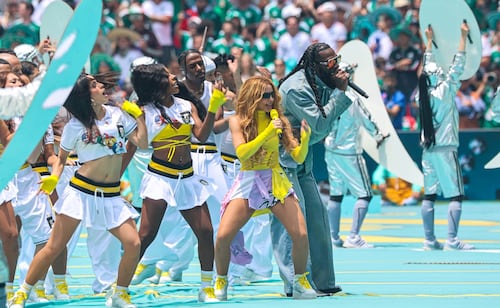
Shakira releases Spanish version of World Cup 2026 song 'Dai Dai'
Translated from Spanish, summarized and contextualized by DistantNews.
At a glance
News
Named sources
Context piece
- Colombian singer Shakira released the Spanish version of the 2026 World Cup official song, "Dai Dai."
- The song, originally in English, features Nigerian artist Burna Boy and was released two days before the final.
- Shakira previously performed the song at the opening ceremony and will perform it again at the closing ceremony.
Colombian superstar Shakira has unveiled the Spanish version of "Dai Dai," the official song for the 2026 FIFA World Cup. The track, a collaboration with Nigerian artist Burna Boy, was initially released in English before the tournament's commencement. This new Spanish rendition arrives just two days before the highly anticipated final match.
Shakira, who performed the song during the opening ceremony on June 11 at the Estadio Azteca in Mexico City, shared a video of herself singing the Spanish lyrics on social media. "In the 11 against 11, each one in their role, nobody plays when they give their all," she wrote, emphasizing the song's theme of dedication and effort.
The singer is also slated to perform "Dai Dai" at the World Cup closing ceremony this Sunday at MetLife Stadium in East Rutherford, New Jersey, just before the final showdown between Argentina and Spain. This marks another significant musical contribution to a World Cup for Shakira, who famously performed "Waka Waka (This Time for Africa)" at the 2010 South Africa World Cup, a song widely regarded as one of the tournament's most iconic anthems.
Fans can also look forward to Shakira's performance with the Ugandan dance group Los Ghetto Kids during the final. The release of the Spanish version of "Dai Dai" adds another layer of cultural connection to the global event, resonating with a wider audience as the tournament reaches its climax.
DistantNews Editorial
Originally published by El Universal in Spanish. Translated, summarized, and contextualized by our editorial team with added local perspective. Read our editorial standards.
More Stories


From Our Blog

What Press Freedom Means for the News You Read

What Gets Lost (and Found) When News Is Translated

The Critical Role of Diaspora Media in Global News

What Travellers Should Know About Countries with Restricted Press

A Digital Nomad's Guide to Following Local News
