

SHC acquits man in university student's 2017 suicide case
Summarized and contextualized by DistantNews.
At a glance
News
Named sources
Outcome reported
- The Sindh High Court acquitted a man sentenced to life imprisonment for a 2017 university student's suicide.
- The man was convicted of terrorism and cyberstalking charges based on communication data from the student's phone.
- The court found that the prosecution failed to prove charges of terrorism, blackmail, or cyberstalking beyond a reasonable doubt.
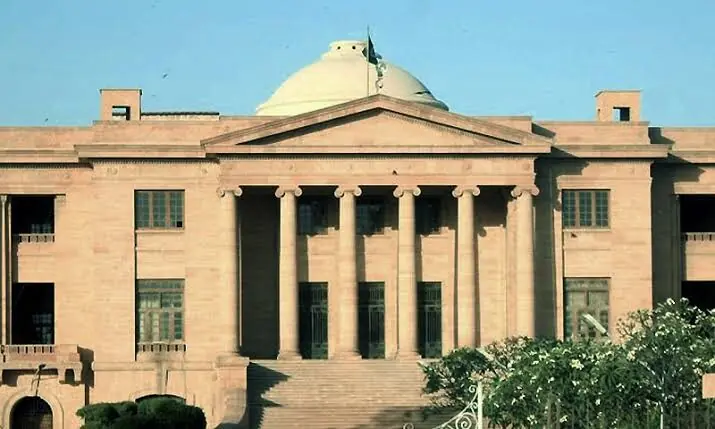
The Sindh High Court (SHC) has acquitted a man who was previously handed a life sentence in connection with the 2017 suicide of a university student. The man, Anees Khaskheli, a private school teacher, had been convicted three years prior based on communication data retrieved from the mobile phone of the deceased, Naila Rind.
Rind, a final-year student at Sindh University, was found dead in her hostel room on January 1, 2017. Police arrested Khaskheli shortly after, citing frequent communication between the two. In January 2023, an anti-terrorism court (ATC) sentenced him under various sections of the Anti-Terrorism Act and the Prevention of Electronic Crimes Act, including charges of terrorism and cyberstalking.
No dissemination or public display of photos was proved. Blackmail was not proved.
Challenging his conviction, Khaskheli appealed to the SHC. A two-member bench of the high court, in its written verdict released on Monday, noted that the prosecution had failed to establish its case. The court specifically stated that no evidence of dissemination or public display of photos was proven, nor was blackmail substantiated.
Furthermore, the bench concluded that no "unlawful act" on Khaskheli's part had been proven, and critically, that the prosecution "failed to prove its case beyond [a] reasonable doubt." The court also highlighted issues with the investigation officer's reliance on photocopies of documents, emphasizing that trial courts must provide valid reasons for admitting secondary evidence. Advocates representing Khaskheli argued the case, while the additional prosecutor general represented the complainant, Naila's brother.
failed to prove its case beyond [a] reasonable doubt
DistantNews Editorial
Originally published by Dawn. Summarized and contextualized by our editorial team with added local perspective. Read our editorial standards.
More Stories



From Our Blog

What Gets Lost (and Found) When News Is Translated

The Critical Role of Diaspora Media in Global News

What Travellers Should Know About Countries with Restricted Press

A Digital Nomad's Guide to Following Local News

How the Same Story Looks Different in Different Countries
