


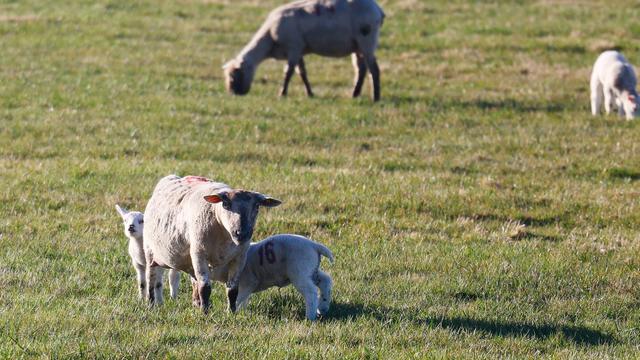
Sheep on tracks cause police operation and railway closure in northern Germany
Translated from German, summarized and contextualized by DistantNews.
At a glance
News
Official statement
Outcome reported
- Nine sheep on a railway track near Mohrkirch, Germany, caused a police operation and blocked the train line between Flensburg and Kiel.
- The sheep escaped due to a faulty fence and were guided back to a pasture by their owner.
- The incident led to a 1.5-hour closure of the railway line, and authorities are warning animal owners about the dangers and potential legal consequences of escaped livestock.
Nine sheep on the railway tracks near Mohrkirch in the Schleswig-Flensburg district occupied the attention of federal police and led to the closure of the train line between Flensburg and Kiel. The incident occurred Tuesday afternoon when the animals gained access to the tracks due to a defect in their pasture's fencing.
Federal police, with the assistance of the sheep's owner, successfully guided the escaped animals back to a pasture. The railway line remained closed for approximately one and a half hours due to the obstruction. This is not the first such incident; federal police were also deployed last Friday for sheep on the tracks between Flensburg and Padborg, Denmark, caused by an issue with an electric fence.
Authorities are now issuing a stern warning to animal owners, particularly those whose properties are near railway lines. They emphasize the responsibility to maintain fences in perfect condition. The police highlighted that escaped animals causing trains to brake could be considered a dangerous interference with rail traffic, a criminal offense. Furthermore, passengers on the train could be injured during sudden braking, and the responsible party could face claims for compensation due to train delays and cancellations.
DistantNews Editorial
Originally published by Die Zeit in German. Translated, summarized, and contextualized by our editorial team with added local perspective. Read our editorial standards.
More Stories



From Our Blog

What Gets Lost (and Found) When News Is Translated

How the Same Story Looks Different in Different Countries

The Critical Role of Diaspora Media in Global News

What Travellers Should Know About Countries with Restricted Press

A Digital Nomad's Guide to Following Local News
