

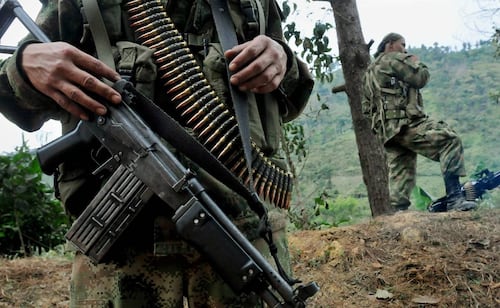
 Image: Karla Guerrero / EL UNIVERSAL
Sheinbaum’s second government report highlights military research and armored vehicles
Translated from Spanish and summarized by DistantNews. Read the original for the full story.
At a glance
News
Official statement
Context piece
- Mexico’s Defense Ministry reported progress on five research projects, including explosive-device detection, drone defense, military hospital equipment, breast cancer treatment and AI-based operational education.
- The Navy began assembling two combat-version Escualo armored tactical vehicles designed to withstand improvised explosive devices and drone attacks.
- The Navy also completed oceanographic studies, research cruises, nautical charts and bathymetric surveys to support naval operations and navigation safety.
Mexico’s second government report under President Claudia Sheinbaum highlights a broad military research program, from countering improvised explosive devices to developing a preclinical breast cancer treatment strategy.
The Defense Ministry began five projects in January 2026. By June 30, the recognition and neutralization system for improvised explosive devices had reached 68 percent completion. A simulator for operating drones and counter-drone systems stood at 25 percent, while self-generating steam sterilizers for military hospitals reached 38 percent.
The remaining projects included a preclinical therapeutic strategy for breast cancer, at 15 percent, and a digital education platform for operational art and design using generative artificial intelligence, at 27 percent. A prototype solid-propellant rocket cartridge and a crew-training simulator had not yet begun development.
The Navy reported that it had started assembling two Escualo-type armored tactical vehicles in their combat version. The vehicles were designed to withstand attacks involving improvised explosive devices and drones. The ministry also completed 20 oceanographic research studies in December 2025, covering coastal dynamics, dumping-site selection, chemical oceanography, marine pollution and harmful algal blooms in major Pacific, Gulf of Mexico and Caribbean ports and bays.
Research vessels carried out 14 cruises to monitor physical and chemical oceanographic variables, conduct oil-spill drills and perform hydrographic surveys. The Navy also published 2026 tide-prediction calendars and tables, built nine nautical charts and completed 17 bathymetric surveys to support maritime operations, naval planning and navigation safety.
About this summary
Originally published by El Universal in Spanish. Translated, summarized, and contextualized automatically by DistantNews, with a note on how the source frames the story. Not individually reviewed before publishing. How this works.
More Stories

From Our Blog

What Press Freedom Means for the News You Read

What Gets Lost (and Found) When News Is Translated

The Critical Role of Diaspora Media in Global News

What Travellers Should Know About Countries with Restricted Press

A Digital Nomad's Guide to Following Local News
