


Sheinbaum Urges End to 'Militarized Schools' Term, Denies Army Links
Translated from Spanish, summarized and contextualized by DistantNews.
At a glance
News
Named sources
Context piece
- Mexican President Claudia Sheinbaum stated that "militarized schools" have no connection to the Army or Navy.
- She believes the term is misleading and should be avoided, especially after a student's death at a private military-style academy in Tamaulipas.
- Sheinbaum emphasized that any educational model must guarantee children's rights and that discipline should not involve violence or abuse.
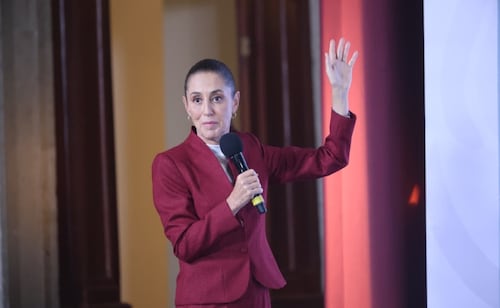
Mexican President Claudia Sheinbaum has called for an end to the term "militarized schools," asserting that these educational centers have no link to the Army or Navy. Her remarks came amid discussions about this educational model following the death of a student at a private military-style academy in Tamaulipas.
During her morning press conference, Sheinbaum addressed the continued existence of such schools in Guanajuato, stating that the state's governor should discuss the matter with the Secretary of Public Education. "I don't think they should be called militarized schools," she insisted, arguing that the term creates a false perception of military involvement or influence.
I don't think they should be called militarized schools, because it has nothing to do with the Army or the Navy. It's been a while since, as the general secretary explained here, they have nothing to do with them. So, speaking of militarized schools leads us to think that there is some influence of the Armed Forces in schools, and there is not.
Sheinbaum reiterated previous statements by the Secretary of National Defense, emphasizing that these schools do not depend on or are affiliated with the Armed Forces. "Speaking of militarized schools leads us to think that there is some influence of the Armed Forces in schools, and there is not," she explained.
To what extent can military discipline in a primary or secondary school lead to abuse, as was the case in Tamaulipas? Because it is from there that the decision is made by the Secretariat of Public Education.
The President also highlighted the debate surrounding disciplinary methods in these institutions, particularly after the Tamaulipas incident. She questioned the extent to which military-style discipline in primary or secondary schools could lead to abuse against children. Sheinbaum stressed that any educational model must ensure the unrestricted respect for children's rights and rejected the idea that discipline can be imposed through violence or mistreatment.
"The issue of discipline, the limits for girls and boys, must be within a framework where there is no abuse and no violence against girls and boys, because the supreme right of children must be defended," she affirmed. She concluded by stating that it is the responsibility of the Secretariat of Public Education to establish the guidelines for these schools.
The issue of discipline, the limits for girls and boys, must be within a framework where there is no abuse and no violence against girls and boys, because the supreme right of children must be defended.
DistantNews Editorial
Originally published by El Universal in Spanish. Translated, summarized, and contextualized by our editorial team with added local perspective. Read our editorial standards.
More Stories


From Our Blog

What Press Freedom Means for the News You Read

What Gets Lost (and Found) When News Is Translated

The Critical Role of Diaspora Media in Global News

What Travellers Should Know About Countries with Restricted Press

A Digital Nomad's Guide to Following Local News
