


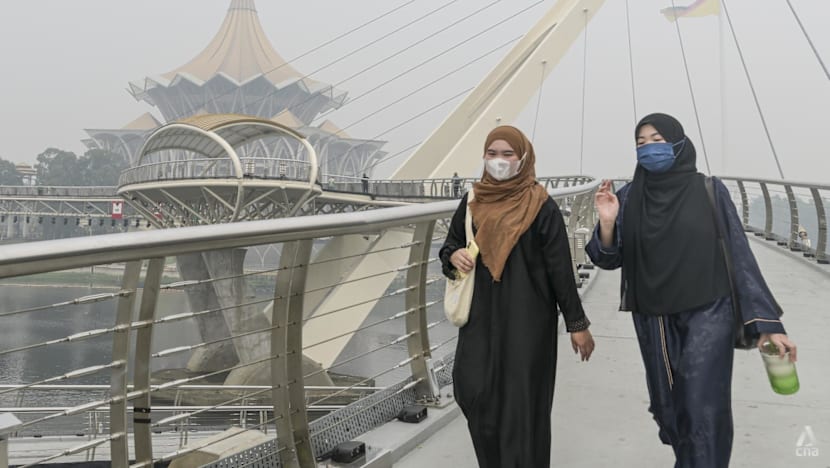

Singapore air quality improves to moderate levels after unhealthy readings
Translated from English and summarized by DistantNews. Read the original for the full story.
At a glance
News
Official statement
Ongoing story
- Air quality in Singapore’s central, western and eastern regions improved to moderate levels after briefly reaching the unhealthy range on Saturday.
- The National Environment Agency said haze could persist if fires in Indonesia remain active, with conditions forecast to range from high moderate to low unhealthy levels.
- The agency began issuing daily haze advisories after Singapore’s 24-hour PSI exceeded 100 for the first time since October 2023.
Singapore’s air quality returned to the moderate range on Saturday after three regions recorded unhealthy readings earlier in the day. The central region’s 24-hour Pollutant Standards Index fell to 93 by 11pm, from a peak of 123 at 1am.
The western and eastern regions also improved, recording PSI readings of 88 and 78 at 11pm. Both had entered the unhealthy range earlier, with readings of 103 in the west and 102 in the east at 6am. The northern and southern regions stayed moderate throughout the day, ending at 75 and 74 respectively.
The 24-hour PSI entered the unhealthy band of 101 to 200 at 7am on Friday. It marked the first time the index had exceeded 100 since October 8, 2023, prompting the National Environment Agency to begin issuing daily haze advisories and forecasts to help people plan activities and events.
The agency said Singapore could continue to experience transboundary haze if fires in Indonesia remain active. Smoke plumes over southern and central Sumatra and parts of Kalimantan continued drifting toward Singapore, while dry conditions and southeasterly or southerly winds were expected to persist in the coming days.
The 24-hour PSI measures six pollutants and forms the basis of Singapore’s daily health advisories. The agency said a reading from 201 to 300 is considered very unhealthy, while a reading above 300 is hazardous.
About this summary
Originally published by CNA in English. Translated, summarized, and contextualized automatically by DistantNews, with a note on how the source frames the story. Not individually reviewed before publishing. How this works.
More Stories



From Our Blog

News in Translation: What Gets Lost, and How We Keep the Framing

Diaspora Media: How Communities Follow News From Home

Traveling Where the Press Is Not Free: How to Read the News There

The Digital Nomad's Guide to Local News

The Same Story, Different Countries: How Coverage Changes at the Border
