

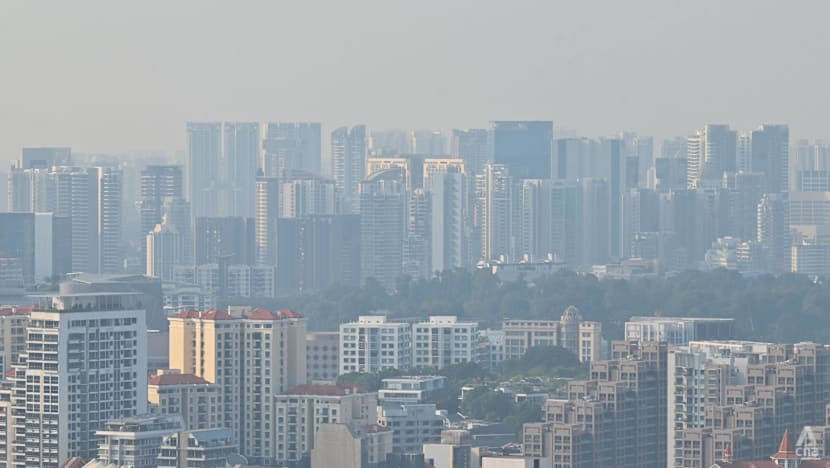

Singapore braces for potential El Nino return in 2026
Translated from English and summarized by DistantNews. Read the original for the full story.
At a glance
News
Sources not specified
New plan
- El Nino conditions are likely to develop between June and July, with an over 80% chance of an event occurring in 2026, according to Singapore's Meteorological Service.
- El Nino and La Nina are opposite phases of the El Nino-Southern Oscillation (ENSO) climate pattern in the Pacific Ocean, affecting global weather.
- El Nino typically brings hotter, drier conditions to Southeast Asia, while La Nina leads to wetter weather, and a positive Indian Ocean Dipole is also predicted.
Singapore could see El Nino conditions develop between June and July, with a high probability of an event occurring in 2026, the Meteorological Service Singapore (MSS) announced May 29. Key indicators, such as warmer sub-surface ocean temperatures in the eastern tropical Pacific, support this prediction.
El Nino can typically last up to 18 months and La Nina up to three years.
The recent El Nino event occurred between 2023 and early 2024, followed by La Nina conditions that brought wetter weather to the region. The last strong El Nino was observed between 2015 and 2016. Alongside the potential El Nino, MSS also predicted a positive Indian Ocean Dipole (IOD) event developing between July and August.
El Nino events typically occur every three to five years, disrupting global weather patterns, and often bringing hotter and drier conditions to Southeast Asia.
El Nino and La Nina are part of the naturally occurring El Nino-Southern Oscillation (ENSO) climate pattern in the Pacific Ocean. ENSO has two extreme phases: the warm phase, El Nino, and the cold phase, La Nina, with a neutral state in between. El Nino events, which typically last up to 18 months, occur every three to five years and disrupt global weather patterns, often causing hotter and drier conditions in Southeast Asia.
The Spanish term El Nino was first used by fishermen along the coasts of Ecuador and Peru to refer to a warm ocean current that typically appears around December and lasts for several months
The term El Nino, meaning "little boy," was first used by fishermen in Ecuador and Peru for a warm ocean current appearing around December. La Nina means "little girl." These phenomena disrupt normal Pacific Ocean conditions where trade winds push warm water west and cold water rises from the depths. During El Nino, trade winds weaken, pushing warm water east toward the Americas and bringing more rain to the central and eastern tropical Pacific, while the western part experiences less. The opposite occurs during La Nina.
During normal conditions in the Pacific Ocean, trade winds blow west along the equator, taking warm water from South America towards Asia.
About this summary
Originally published by CNA in English. Translated, summarized, and contextualized automatically by DistantNews, with a note on how the source frames the story. Not individually reviewed before publishing. How this works.
More Stories


From Our Blog

News in Translation: What Gets Lost, and How We Keep the Framing

Diaspora Media: How Communities Abroad Follow Home

Traveling Where the Press Is Not Free: How to Read the News There

The Digital Nomad's Guide to Local News

The Same Story, Different Countries: How Coverage Changes at the Border
