

Singapore sends 70 tonnes of unwanted clothes to Malaysia to recycle
Summarized and contextualized by DistantNews.
At a glance
News
Named sources
Context piece
- Singapore is exporting up to 70 tonnes of unwanted clothing weekly to Malaysia for textile recycling.
- The initiative, run by social enterprise Cloop, sends clothes to Life Line Clothing in Port Klang, Malaysia.
- The volume has doubled in two years, highlighting the growing challenge of managing textile waste and the need for cross-border solutions.
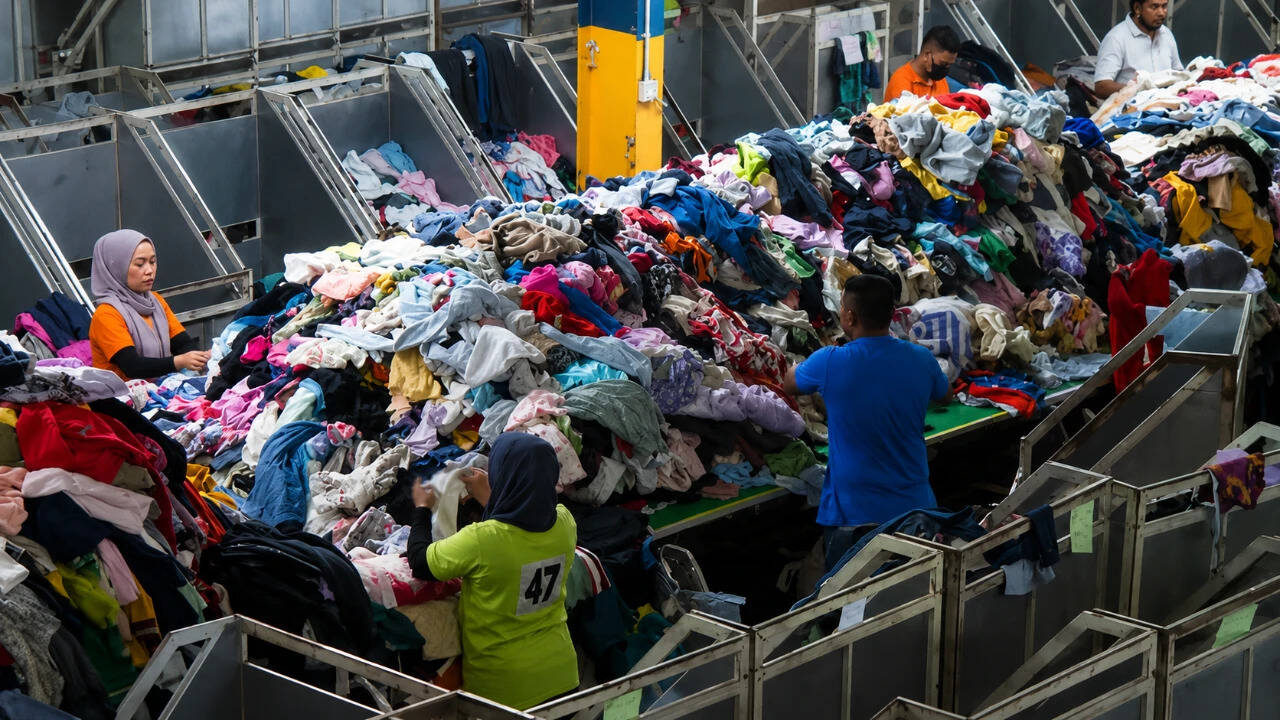
Singapore is sending a significant volume of unwanted clothing to Malaysia each week as part of a cross-border textile recycling partnership. Up to 70 tonnes of discarded garments are transported weekly to Life Line Clothing in Port Klang, Malaysia, by the social enterprise Cloop. This initiative aims to give these textiles a second life, moving them out of the waste stream.
The scale of this operation has notably increased, with the amount of clothing shipped now twice what it was two years ago. This surge underscores the growing challenge Singapore faces in managing its textile waste. The partnership with Life Line Clothing allows for the sorting of garments to determine if they can be reused, recycled into new materials, or processed further.
At the Life Line Clothing facility, the collected clothes undergo a sorting process. Items that are still wearable are prioritized for reuse, extending their lifespan. Garments that cannot be worn again are directed towards recycling streams, where their materials can be recovered. This cross-border model addresses the practical difficulties of textile recycling within Singapore's dense urban environment, where complex fiber blends and components can complicate processing.
The initiative reflects a growing effort to keep textiles in circulation and reduce the amount of clothing destined for disposal. By channeling unwanted clothes to a specialized facility in Malaysia, Singapore is attempting to manage its waste more effectively and promote a more circular economy for fashion.
DistantNews Editorial
Originally published by Times of India. Summarized and contextualized by our editorial team with added local perspective. Read our editorial standards.
More Stories



From Our Blog

What Press Freedom Means for the News You Read

What Gets Lost (and Found) When News Is Translated

The Critical Role of Diaspora Media in Global News

What Travellers Should Know About Countries with Restricted Press

A Digital Nomad's Guide to Following Local News
