


Singapore trials new tech to halve energy used in desalination pre-treatment
Translated from English, summarized and contextualized by DistantNews.
At a glance
News
Sources not specified
Ongoing story
- Singapore is trialing a new ceramic membrane technology to pre-treat seawater for desalination, potentially halving energy use.
- The trial at Tuas aims to replace the current three-stage pre-treatment process with a single, more compact step.
- If successful, the technology could be deployed at desalination plants across Singapore, reducing energy consumption and footprint.
Singapore is piloting an innovative ceramic membrane technology that could significantly reduce the energy required for the pre-treatment of seawater in desalination processes.
This technology will allow us to save 50 per cent of the energy (needed) for seawater pre-treatment.
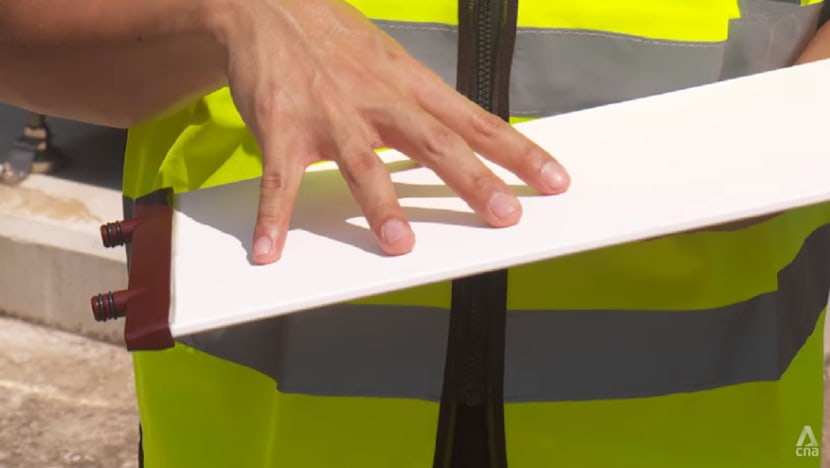
The trial, underway at the Tuas facility, is evaluating whether ceramic membranes developed by Japanese firm Meiden can replace the existing three-stage system used to remove contaminants from seawater. National water agency PUB stated that if the technology proves reliable and cost-effective, it could be implemented in desalination plants throughout the nation.
This allows us to produce water at the same high quality that we do today, with much less energy and a smaller footprint.
Currently, preparing seawater for desalination involves removing impurities like dirt, algae, and grease to prevent membrane fouling. This typically requires three stages. The new system being tested aims to consolidate these steps into a single, more compact process using ceramic membranes. Dr. Gurdev Singh, PUB’s chief engineering and technology officer, highlighted the potential benefits: "This technology will allow us to save 50 percent of the energy (needed) for seawater pre-treatment." He added that it would enable water production of the same high quality with less energy and a smaller physical footprint.
Even with algae blooms in the sea, when water reaches the membrane, we can protect (it from) algae on the surface of the membrane, so the filtered water is kept clean.
The trial, a collaboration between PUB, Meiden Singapore, and the National Research Foundation Singapore, began in June and will run for approximately six months. The demonstration plant features 24,000 ceramic membrane sheets and can produce up to 6 million gallons of filtered water daily. The system works by passing seawater over porous ceramic membranes, which trap contaminants on their surface while allowing filtered water to proceed. Meiden noted that ceramic membranes are more durable than conventional polymeric membranes and can maintain performance even under challenging conditions, such as algal blooms or oil spills, by allowing for effective cleaning.
After the algae sticks on the membrane, we can clean (it) using a chemical cleaner. Then we can maintain the same condition.
DistantNews Editorial
Originally published by CNA in English. Translated, summarized, and contextualized by our editorial team with added local perspective. Read our editorial standards.
More Stories


From Our Blog

What Gets Lost (and Found) When News Is Translated

The Critical Role of Diaspora Media in Global News

What Travellers Should Know About Countries with Restricted Press

A Digital Nomad's Guide to Following Local News

How the Same Story Looks Different in Different Countries
