


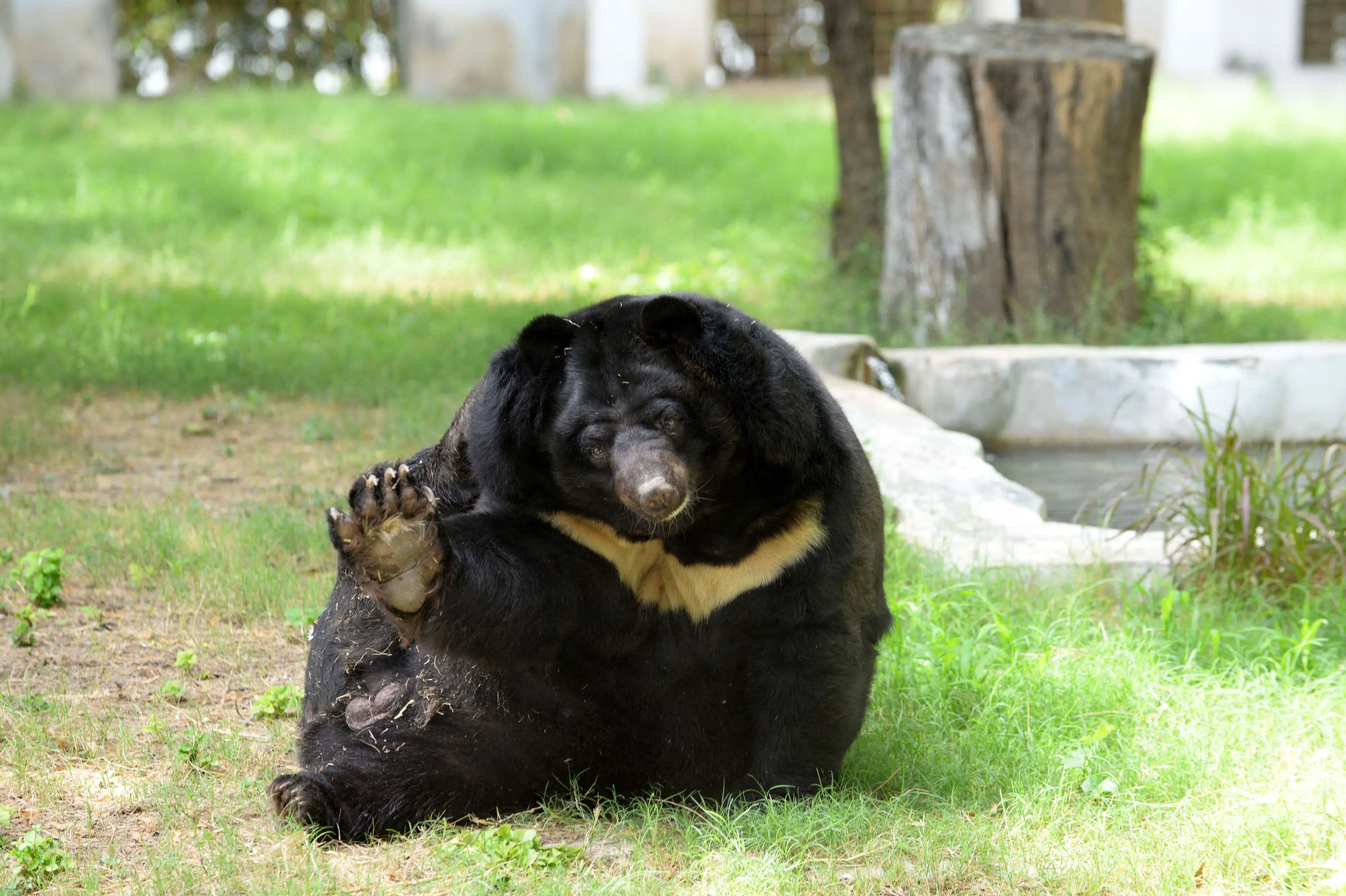
Six rescued bile bears arrive in Denmark from South Korea
Translated from Danish, summarized and contextualized by DistantNews.
At a glance
News
From a news agency
New plan
- Six former bile bears from South Korea have arrived at Knuthenborg Safaripark in Denmark, marking the first time such bears have been in Europe.
- The bears, aged 10-15, previously lived in poor conditions on bile farms in South Korea, an industry banned in early 2026.
- They will gradually acclimate to a new 23,000-square-meter enclosure at the park after spending time in stable facilities.
Six former bile bears, rescued from South Korean farms, have arrived at Knuthenborg Safaripark in Denmark, marking a significant first for Europe. The bears, aged between 10 and 15 years, are of the Asian black bear species and have a history of living in cramped conditions on farms where their bile was extracted for traditional medicine.
Everything has gone perfectly, and we are so happy about that. It has been a logistical masterpiece, and there has been a lot of paperwork because the animals need to enter an EU country from a non-EU country.
South Korea banned bile farming in early 2026, leading to many bears being moved to rescue centers. However, space constraints necessitated an international effort, with Knuthenborg Safaripark becoming the first European destination for these bears. The transport was described as a "logistical masterpiece" by Anne Sofie Conde Meilvang, biologist and project leader, who noted the extensive paperwork involved in bringing the animals into an EU country.
They arrived at Knuthenborg in good spirits and were relatively fresh.
Upon arrival, the bears were reportedly in good spirits and relatively fresh. They will initially be housed in the park's stable facilities before being gradually introduced to a vast outdoor enclosure exceeding 23,000 square meters over the coming weeks. Meilvang explained that the bears' readiness for the larger space will be assessed daily, acknowledging that each bear has a unique personality and may find the new environment overwhelming due to unfamiliar scents and people.
It is a huge enclosure they will be going into, where we have to assess day by day when they are ready for it.
One of the bears carries a Korean name that translates to "Love," referred to as their "love bear." The park staff are working to translate the other bears' names to understand their meanings and potential Danish equivalents. This initiative highlights an international commitment to animal welfare and provides a new home for bears rescued from a controversial industry.
Each bear has its own personality. Some are very brave, and some are a little more reserved.
DistantNews Editorial
Originally published by Berlingske in Danish. Translated, summarized, and contextualized by our editorial team with added local perspective. Read our editorial standards.
More Stories



From Our Blog

What Gets Lost (and Found) When News Is Translated

The Critical Role of Diaspora Media in Global News

What Travellers Should Know About Countries with Restricted Press

A Digital Nomad's Guide to Following Local News

How the Same Story Looks Different in Different Countries
