


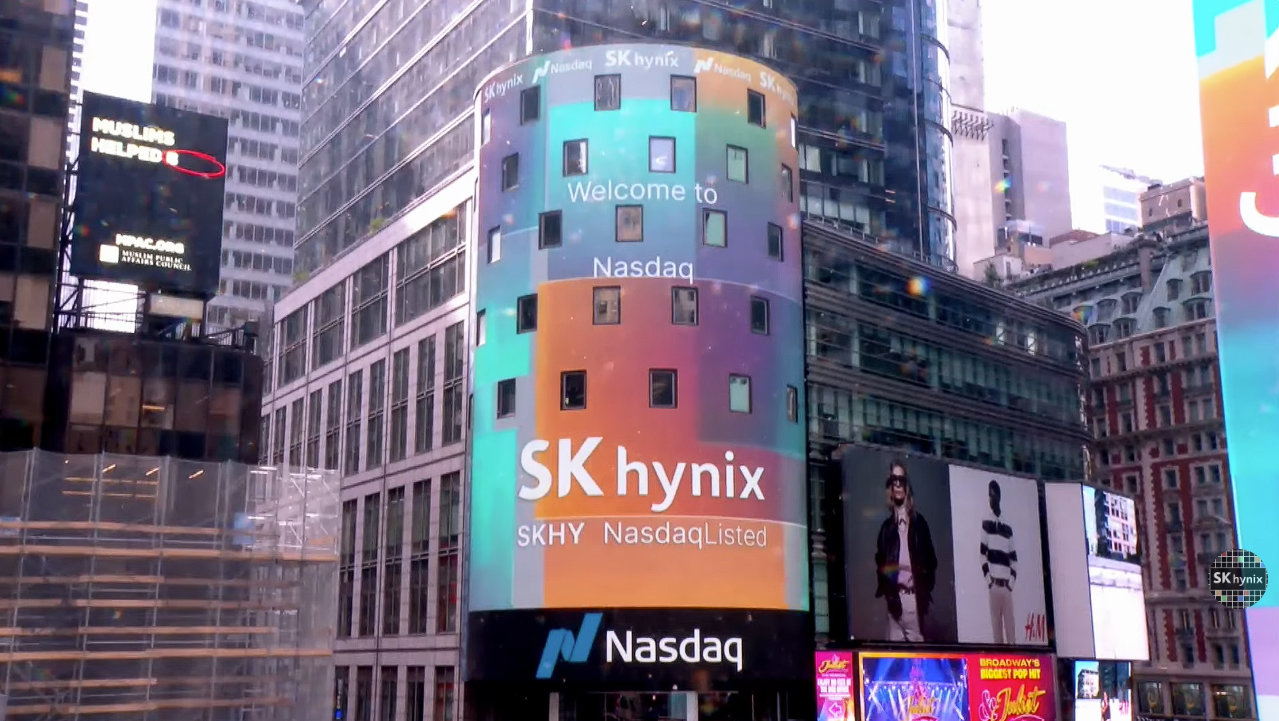
SK Hynix Dollars Flood In, May Stabilize High Exchange Rate
Translated from Korean, summarized and contextualized by DistantNews.
At a glance
News
Named sources
New plan
- SK Hynix's Nasdaq ADR listing is expected to inject significant dollar liquidity into South Korea's foreign exchange market.
- The company raised approximately $26.5 billion (40 trillion won) through the ADR issuance, with most funds intended for domestic investment.
- This influx of dollars is anticipated to help stabilize the won-dollar exchange rate, which has seen a prolonged period of weakness.
SK Hynix's successful listing of American Depositary Receipts (ADRs) on Nasdaq is poised to inject a substantial amount of dollars into South Korea's foreign exchange market, potentially easing the current high won-dollar exchange rate. The tech giant raised about $26.5 billion, or approximately 40 trillion won, through the ADR offering.
The funds are slated for domestic investments, including the development of SK Hynix's semiconductor cluster in Yongin, its advanced packaging facility in Cheongju, and the acquisition of extreme ultraviolet (EUV) lithography equipment. This means a significant portion of the dollars raised will be converted into won, increasing dollar supply in the local market.
The currency conversion is expected to begin in the latter half of this month, and with discussions of converting about $1 billion per day, the dollar supply effect could potentially last until August and September.
Market analysts anticipate that this large inflow of dollars will help reverse the recent trend of won depreciation. The high exchange rate has been driven by a strong global dollar, increased overseas investment by Koreans, and net selling of South Korean stocks by foreign investors. SK Hynix's move is seen as a potential turning point.
The impact of the dollar inflow is expected to be significant, with some comparing it to a currency swap. The amount raised by SK Hynix exceeds the actual dollars supplied through the currency swap agreement between the Bank of Korea and the U.S. Federal Reserve during the COVID-19 pandemic. Experts suggest that the dollar supply effect could extend through August and September, with gradual conversions occurring daily.
The recent decline in the exchange rate also reflects these expectations.
DistantNews Editorial
Originally published by Dong-A Ilbo in Korean. Translated, summarized, and contextualized by our editorial team with added local perspective. Read our editorial standards.
More Stories



From Our Blog

What Gets Lost (and Found) When News Is Translated

The Critical Role of Diaspora Media in Global News

What Travellers Should Know About Countries with Restricted Press

A Digital Nomad's Guide to Following Local News

How the Same Story Looks Different in Different Countries
