

Small Modular Reactors Gain Momentum in Europe and U.S. for Clean Energy
Translated from Romanian, summarized and contextualized by DistantNews.
At a glance
News
Named sources
Context piece
- Small Modular Reactors (SMRs) are gaining traction in Europe and the U.S. as a promising clean energy technology, supported by governments and international energy policies.
- SMRs offer flexibility, reduced costs, and can accelerate decarbonization efforts, according to Nuclearelectrica.
- These reactors, producing up to 300 MWe, are designed for factory production, potentially lowering costs and construction times compared to traditional nuclear plants.
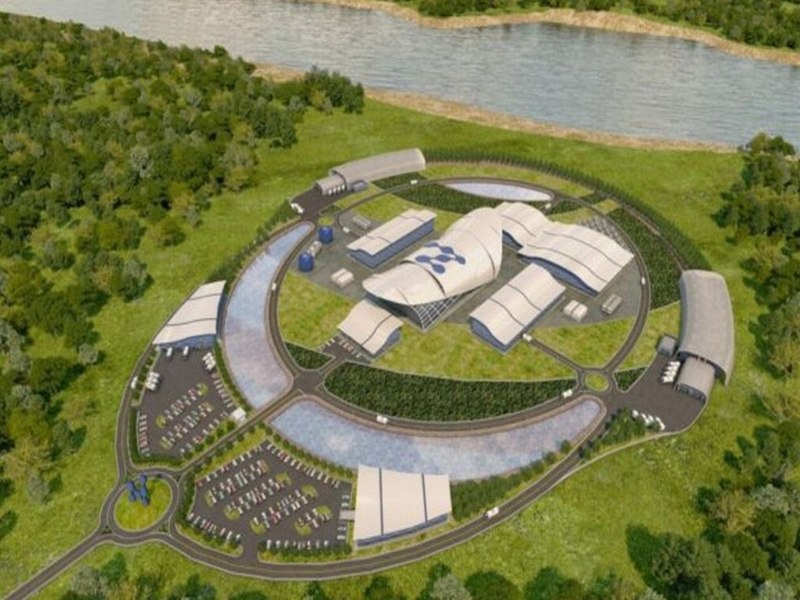
Small Modular Reactors (SMRs) are emerging as a key technology in the global pursuit of clean energy, attracting increasing support from governments and international energy policies across Europe and the United States. Nuclearelectrica highlights these reactors as a promising solution, offering flexibility in deployment, lower costs, and a significant contribution to economic development and the acceleration of decarbonization processes.
Designed based on decades of operational experience with large-scale nuclear reactors, SMRs are engineered for efficiency and flexibility. Experts view them as a crucial technology for clean energy production, designed to be more cost-effective and adaptable than conventional nuclear power plants. While a typical large reactor produces between 1,000 and 1,400 MWe, an SMR can generate up to 300 MWe. A major advantage lies in their construction method: SMRs are intended for mass production in factories, which could substantially reduce both the expenses and the timeline for nuclear projects.
There are four primary types of SMRs: light water reactors, fast neutron reactors, graphite-moderated high-temperature reactors, and molten salt reactors. Their compact and modular design facilitates easier transportation and installation, making them suitable for diverse applications, including powering data centers or serving remote areas where grid connection is challenging or prohibitively expensive. Furthermore, Nuclearelectrica points out the potential to utilize the sites of former, decommissioned power plants. These locations often possess existing energy infrastructure, allowing for SMR installation with lower investment compared to building new large-scale reactors from scratch. This approach could aid in the reindustrialization of these areas and stimulate local economies while cutting project costs.
DistantNews Editorial
Originally published by Adevărul in Romanian. Translated, summarized, and contextualized by our editorial team with added local perspective. Read our editorial standards.
More Stories

From Our Blog

What Gets Lost (and Found) When News Is Translated

The Critical Role of Diaspora Media in Global News

What Travellers Should Know About Countries with Restricted Press

A Digital Nomad's Guide to Following Local News

How the Same Story Looks Different in Different Countries
