

SME Sector: 'Freeze Minimum Wage Next Year... Payment Capacity Reached Limit'
Translated from Korean, summarized and contextualized by DistantNews.
At a glance
News
Sources not specified
Context piece
- Small and medium-sized businesses (SMEs) in South Korea are calling for a freeze on the minimum wage for the upcoming year, citing financial strain.
- They argue that high inflation and interest rates have pushed their payment capacity to its limit and advocate for wage decisions that reflect industry-specific conditions.
- The group expressed frustration over the rejection of differentiated minimum wage applications by industry and highlighted that the current minimum wage, including holiday pay, is high compared to other countries.
South Korean small and medium-sized businesses (SMEs) and micro-businesses are urgently appealing for the minimum wage to be frozen next year. They contend that the combined pressures of high inflation and interest rates have pushed their ability to pay to the brink, necessitating minimum wage decisions that consider the unique financial realities of different industries.
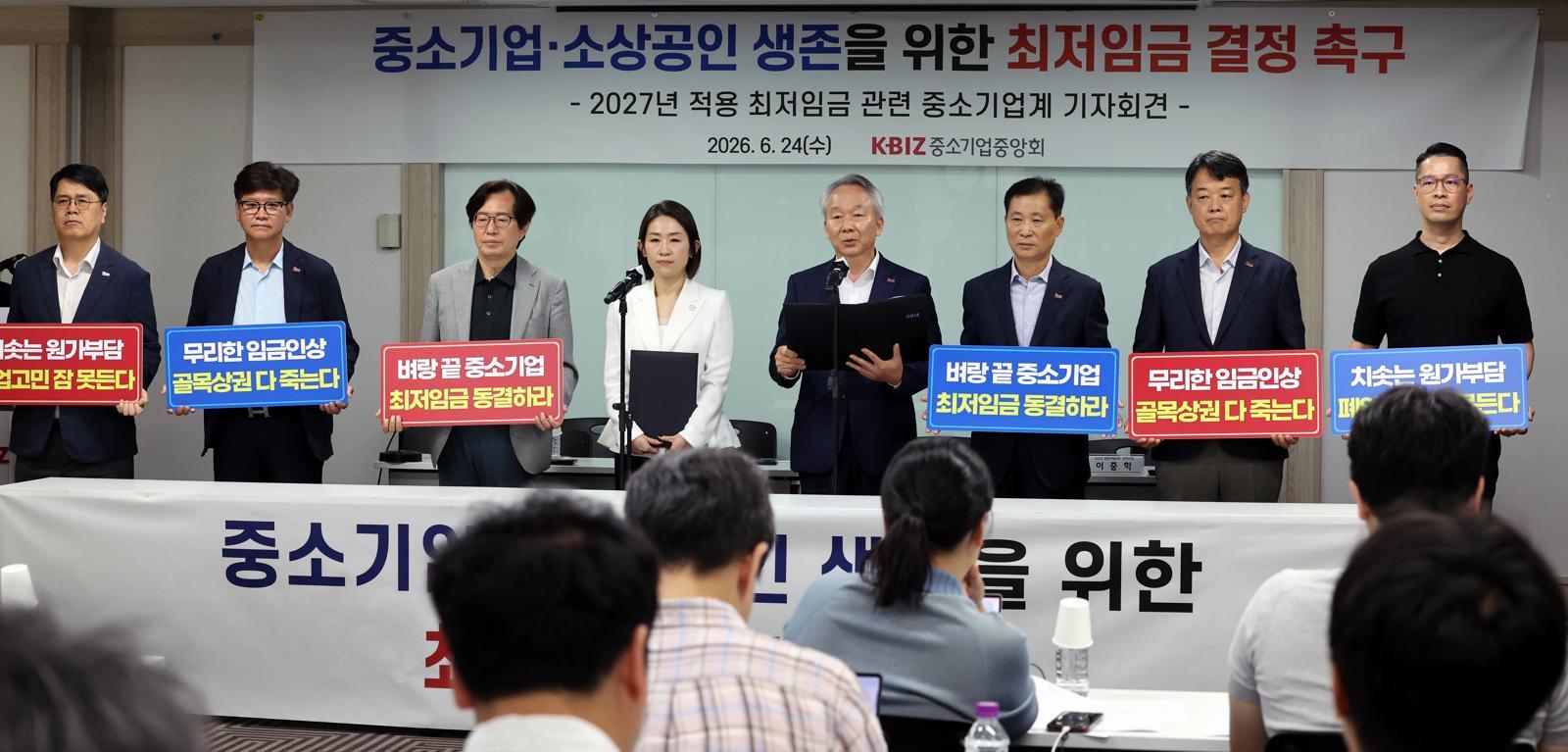
At a press conference held at the Korea Federation of SMEs (KBIZ), representatives from various sectors pleaded for a "minimal breathing room" through a minimum wage freeze, warning that the collapse of SMEs and micro-businesses would lead to the downfall of the entire working-class economy. The gathering included leaders from sectors such as automatic vending machine operations and makeup artistry.
If SMEs and micro-businesses, the economic backbone, collapse, the entire working-class economy will collapse. Please create minimal breathing room through a minimum wage freeze.
These business leaders expressed a sense of disconnect, noting that while the broader economy shows signs of growth with strong semiconductor performance and record-high stock prices, these benefits are not reaching SMEs and micro-businesses. They are grappling with persistent sluggish domestic demand, rising costs due to inflation, and an increasing burden of debt.
The SMEs also pointed out that the current minimum wage, when including holiday pay, represents a significant portion of the median wage, placing it at a high level compared to international standards. They argue that continuous increases without considering their payment capacity are pushing them toward a precipice. The group also voiced deep frustration over the recent rejection of a proposal to apply the minimum wage differently across industries, a move they believe is crucial for their survival but is being hindered by labor opposition and the Minimum Wage Commission's passive stance.
We feel deep frustration and helplessness. While various countries implement differentiated application methods, Korea cannot move forward due to labor opposition and the passive attitude of the Minimum Wage Commission.
DistantNews Editorial
Originally published by Dong-A Ilbo in Korean. Translated, summarized, and contextualized by our editorial team with added local perspective. Read our editorial standards.
More Stories


From Our Blog

What Gets Lost (and Found) When News Is Translated

The Critical Role of Diaspora Media in Global News

What Travellers Should Know About Countries with Restricted Press

A Digital Nomad's Guide to Following Local News

How the Same Story Looks Different in Different Countries
