


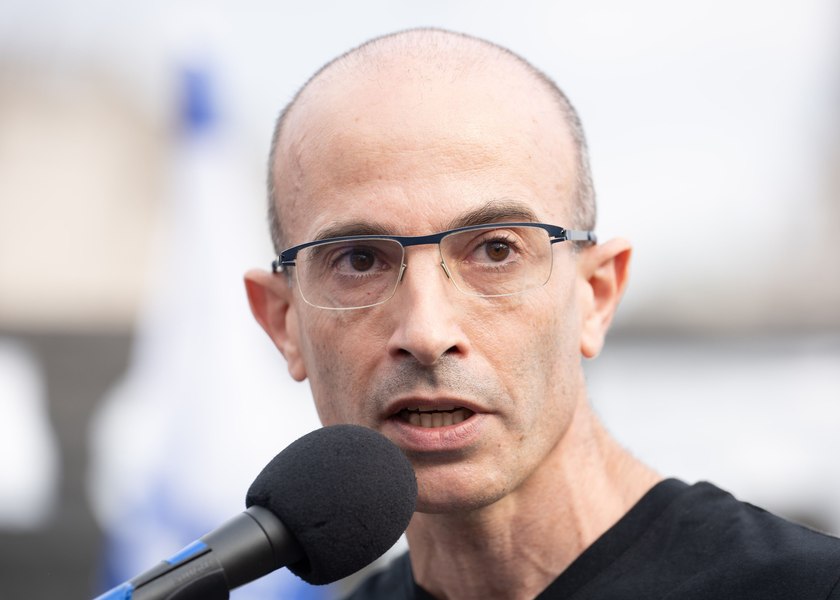
Social media algorithms control attention through fear, anger, and hate, warns historian Yuval Noah Harari
Translated from Romanian, summarized and contextualized by DistantNews.
At a glance
Analysis
Named sources
Context piece
- Israeli historian Yuval Noah Harari warns that social media algorithms exploit fear, anger, and hatred to capture user attention.
- He argues this has led to a global state of emotional overstimulation and a decline in trust in traditional institutions.
- Harari suggests platforms prioritize profit and engagement over truth, creating a toxic information environment.
Social media algorithms are deliberately designed to exploit human emotions like fear, anger, and hatred, effectively controlling user attention and pushing global politics and civil society into a state of perpetual emotional arousal, according to Israeli historian Yuval Noah Harari.
In a discussion on The Ezra Klein Show, Harari explained that these algorithms are optimized not for disseminating truth but for maximizing user engagement. He described social media platforms as having conducted a global psychological experiment on billions of people to discover which stimuli keep users online and interacting aggressively. The findings, he noted, consistently point to negative emotions as the most effective tools for capturing and holding attention.
It's not that trust has completely disappeared from people's minds or from the world. It has shifted from people to algorithms.
This focus on engagement over accuracy has led to an information environment flooded with content designed to provoke extreme emotional reactions. Harari warned that this constant state of heightened alert, while perhaps useful in small doses, is biologically unsustainable for humans, inevitably leading to exhaustion and collapse. "It seems to me that the whole world is currently in a state of overstimulation," he concluded.
Harari also highlighted a profound crisis of liberalism, where trust in traditional institutions like governments, mainstream media, and academia has eroded significantly. Instead of relying on these established sources, many people now place their faith in the algorithms that curate their daily news feeds. "It's not that trust has completely disappeared from people's minds or from the world. It has shifted from people to algorithms," Harari observed.
It seems to me that the whole world is currently in a state of overstimulation.
DistantNews Editorial
Originally published by Adevărul in Romanian. Translated, summarized, and contextualized by our editorial team with added local perspective. Read our editorial standards.
More Stories

From Our Blog

What Gets Lost (and Found) When News Is Translated

The Critical Role of Diaspora Media in Global News

What Travellers Should Know About Countries with Restricted Press

A Digital Nomad's Guide to Following Local News

How the Same Story Looks Different in Different Countries
