


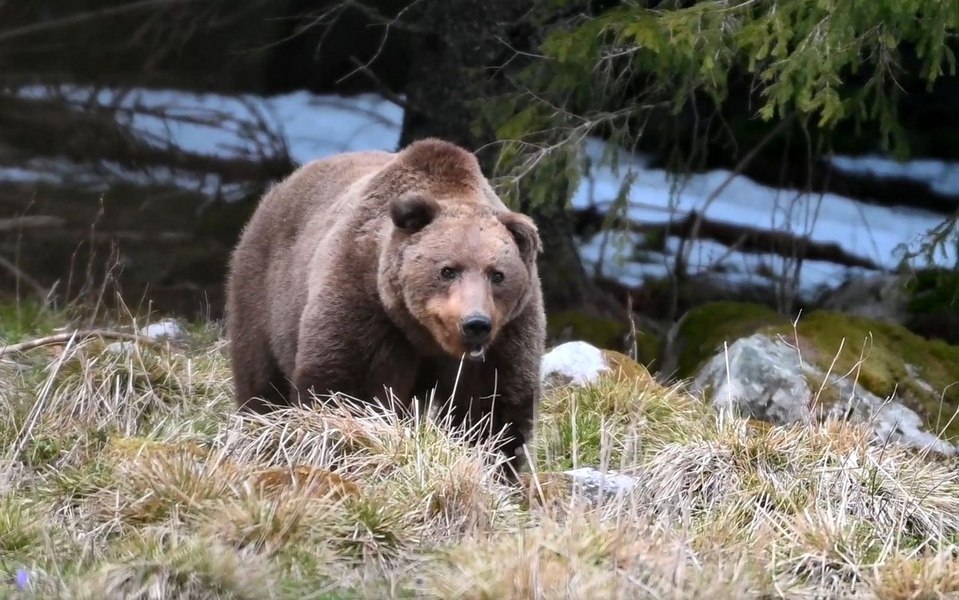
Why Romanian bears approach tourists on Transfăgărășan but avoid Retezat
Translated from Romanian, summarized and contextualized by DistantNews.
At a glance
In-depth
Sources not specified
Context piece
- Bears in Romania's Retezat Mountains are reclusive, avoiding tourist areas, unlike those on the Transfăgărășan highway.
- Historical accounts and photos from the 1970s and 80s show bears on the Transfăgărășan interacting with tourists and construction workers.
- This behavior is attributed to early human contact and feeding by tourists, leading to habituation.
Bears in Romania's Retezat Mountains maintain a discreet presence, largely avoiding areas frequented by tourists, a stark contrast to their counterparts found along the Transfăgărășan highway. While the Retezat bears' rare appearances often spark fear, the Transfăgărășan bears have become a roadside attraction for decades.
In the 70s, you could encounter "beggar" bears on the Transfăgărășan. As soon as they saw you, they would come towards you with their paws outstretched. Drivers who knew their habit would lower the window and offer them a sandwich or an apple.
Rare photographs and accounts from the communist era offer insights into this peculiar behavior. Images digitized from 1982 by Hungarian tourist Attila Toth reveal bears accustomed to human presence on the Transfăgărășan. These "beggar bears" or "scavenger bears" would approach tourists, with drivers sometimes lowering windows to offer food like sandwiches or apples. For first-time observers, encountering these large animals extending their paws was a startling experience.
Evidence suggests these interactions began as early as the 1970s during the construction of the 90-kilometer Transfăgărășan road. Former construction site chief Florea Stanciu recalled instances where bears disrupted work, including destroying a canteen and consuming food supplies. This early contact with construction workers likely initiated the bears' habituation to humans.
It's no joke to suddenly find a two-meter-tall giant advancing towards you with enormous outstretched "hands." How could you know its intentions?
By the late 1970s, the number of bears encountered by tourists on the Transfăgărășan had increased significantly. A 1980 article in Flacăra magazine described bears approaching vehicles with outstretched paws, a behavior that unnerved many unfamiliar with the practice. The habituation is believed to stem from initiatives in the Brașov mountains, where bear cubs were hand-reared, leading to a lack of fear towards humans.
In one winter, a colony of ours was completely isolated. In another, the bears destroyed a canteen and ate all our food supplies.
DistantNews Editorial
Originally published by Adevărul in Romanian. Translated, summarized, and contextualized by our editorial team with added local perspective. Read our editorial standards.
More Stories



From Our Blog

What Gets Lost (and Found) When News Is Translated

The Critical Role of Diaspora Media in Global News

What Travellers Should Know About Countries with Restricted Press

A Digital Nomad's Guide to Following Local News

How the Same Story Looks Different in Different Countries
