

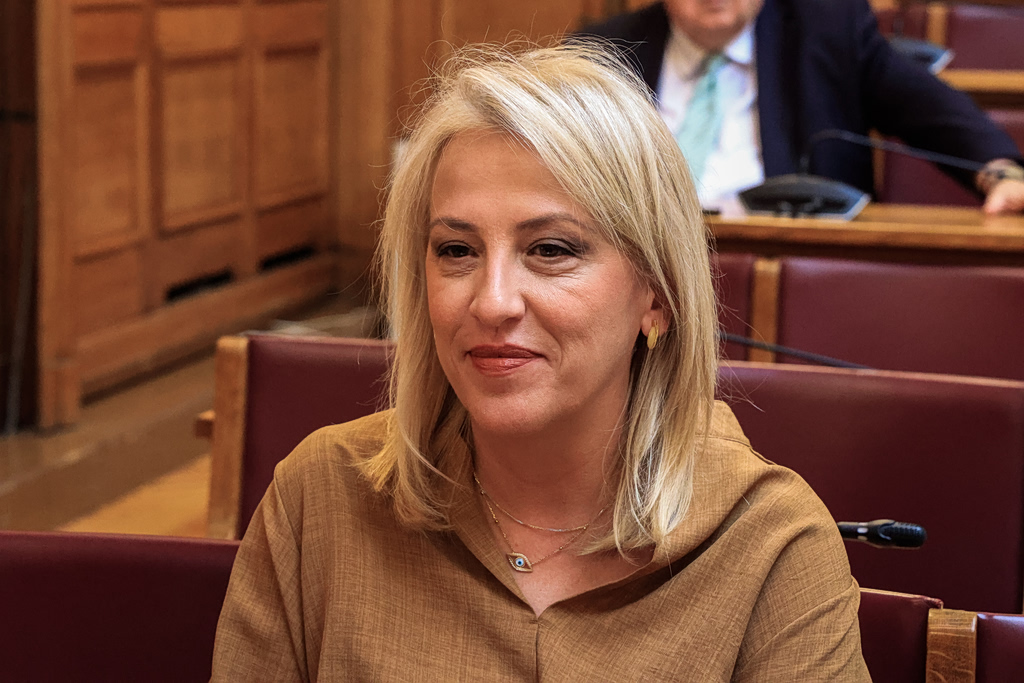

Sofia Zacharaki: The weight of 31 predecessors in Greece's education reform battle
Translated from Greek, summarized and contextualized by DistantNews.
At a glance
In-depth
Sources not specified
Context piece
- Sofia Zacharaki faces the challenge of reforming Greece's education system, a role held by 31 previous ministers since the Metapolitefsi era.
- Key issues include high family spending on tutoring, declining PISA scores, underpaid teachers, and poor school infrastructure.
- Zacharaki is promoting a national high school diploma and evaluating student performance, while facing opposition criticism on these and other educational problems.
Sofia Zacharaki, Greece's Minister of Education, navigates a difficult political landscape as she tackles reforms for the country's high school system. Her office is described as "full of shadows," reflecting the heavy legacy of the 31 education ministers who preceded her since the Metapolitefsi era.
Zacharaki, an educator with a background in English Philology, is advocating for a national high school diploma. This initiative aims to elevate the lyceum's standing and assess students' overall progress, with a particular focus on the performance of second and third-year students and the use of a "thematic bank" for evaluations.
However, she faces significant challenges. Opposition leader Alexis Tsipras has called for the abolition of the national university entrance exams, while Stefanos Parastatidis of PASOK has formally requested a parliamentary committee debate on the "New Lyceum and National Diploma." These political pressures highlight persistent problems: Greek families spend over 2.5 billion euros annually on private tutoring, student performance on PISA tests is deteriorating, and the lyceum has become merely a "waiting room" for exams, prioritizing rote memorization over genuine education.
Further complicating matters are the low salaries of Greek teachers compared to other OECD countries, the aging school infrastructure with 65% of buildings constructed before 1985, and the lack of essential support services like psychologists, social workers, and parallel support for students with special needs. Zacharaki, who has been in active politics for a decade and consistently held government positions since 2019, is seen as a moderate with political potential. Yet, the article suggests her legacy as education minister may be limited due to the immense challenges and the short time until the next elections.
DistantNews Editorial
Originally published by Kathimerini in Greek. Translated, summarized, and contextualized by our editorial team with added local perspective. Read our editorial standards.
More Stories

From Our Blog

What Gets Lost (and Found) When News Is Translated

The Critical Role of Diaspora Media in Global News

What Travellers Should Know About Countries with Restricted Press

A Digital Nomad's Guide to Following Local News

How the Same Story Looks Different in Different Countries
