


Solok Fastest to Recover Rice Fields Post-Disaster, Experts Cite Four Key Factors
Translated from Indonesian, summarized and contextualized by DistantNews.
At a glance
News
Sources not specified
Outcome reported
- Solok Regency has achieved the fastest recovery of rice fields in West Sumatra following the November 2025 flash floods.
- Approximately 98% of damaged rice fields have been rehabilitated, with 91% already replanted and some ready for harvest.
- Experts attribute the swift recovery to farmers' rational passion for economic survival, strong cultural values of self-reliance, community cooperation (gotong royong), and government support.
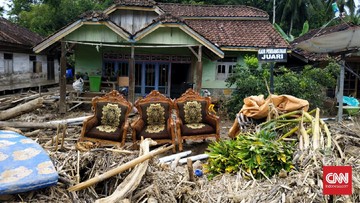
Solok Regency has demonstrated the fastest progress in rehabilitating rice fields in West Sumatra after the devastating flash floods in November 2025. Data from the Task Force for Accelerated Rehabilitation and Reconstruction (Satgas PRR) shows that by the end of May 2026, about 1,484 hectares of lightly and moderately damaged rice fields were rehabilitated, representing 98% of the total damaged area. Furthermore, 1,354 hectares have been replanted, with some fields already entering the harvest period.
They have entered the theory of rational passion, rational farmers. They are no longer building agricultural land for subsistence economy, but for commercial purposes.
Nursyirwan Effendi, an expert in development anthropology and economics at Andalas University, identified four key factors behind Solok's rapid recovery. Firstly, Solok farmers possess a strong drive rooted in the necessity of maintaining their economic livelihood. They operate with a "rational passion," viewing their farms not just for subsistence but for commercial purposes. This rationality stems from long-standing connections to the market, making them acutely aware of the threat to their income when fields are damaged.
Secondly, deeply ingrained cultural values, particularly the Minangkabau principle of self-reliance, play a crucial role. Farmers tend to act independently rather than solely waiting for external aid. Even when taking loans, they do so with careful consideration for their long-term economic existence. Melati, a member of the Sejuk dan Damai Farmer Group, exemplified this by prioritizing field repairs while independently securing funds for replanting.
The need for life cannot stop. Meanwhile, the source of income from agriculture is also to meet other needs. So, rational motivation and the motivation to survive are what drive them to act quickly.
The third factor is the strong social character of the Solok community, which upholds the tradition of "gotong royong" (mutual cooperation) at the nagari (village) level. This collective spirit, encapsulated by the Minang proverb "saciok bak ayam, sadantiang bak basi" (united like chickens, strong like iron), facilitates community cohesion and joint action. This spirit extends to professional teams involved in surveying and designing rehabilitation efforts.
If you borrow, it's not without calculation. They have a long-term view of their economic existence.
Finally, the swift recovery is bolstered by significant support from central and regional governments, as well as the Satgas PRR. This combined governmental and task force effort accelerated rehabilitation processes and the disbursement of aid. Effendi noted that the rapid progress in West Sumatra and Solok indicates a strong push from local governments, central authorities, and even members of the Indonesian House of Representatives who expedited the realization of support.
We in Minang know the principle 'saciok bak ayam, sadantiang bak basi.' So it is easy to gather togetherness.
DistantNews Editorial
Originally published by Tempo in Indonesian. Translated, summarized, and contextualized by our editorial team with added local perspective. Read our editorial standards.
More Stories


From Our Blog

What Gets Lost (and Found) When News Is Translated

The Critical Role of Diaspora Media in Global News

What Travellers Should Know About Countries with Restricted Press

A Digital Nomad's Guide to Following Local News

How the Same Story Looks Different in Different Countries
