


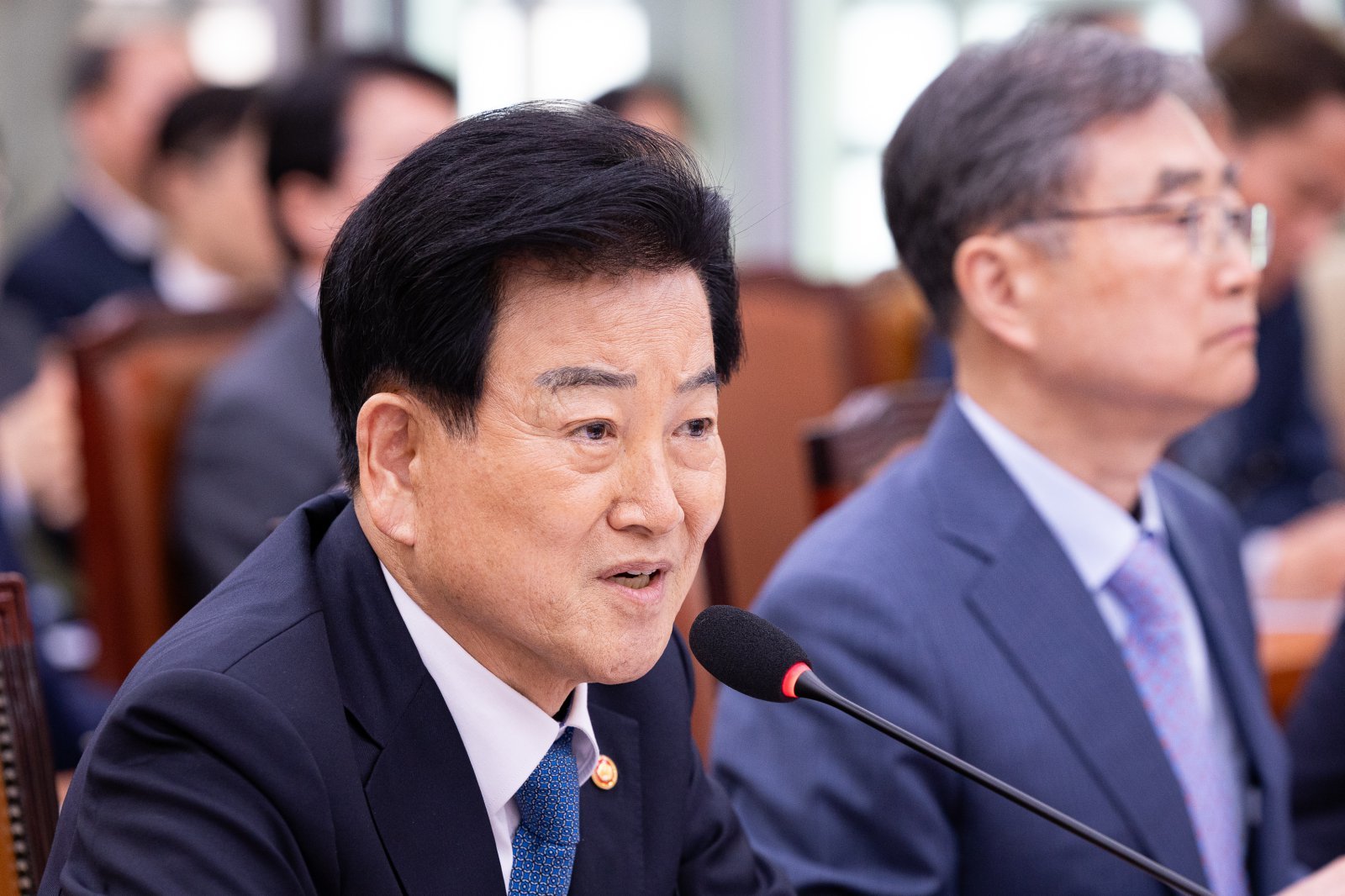
Song Eon-seok: 'Jeong Dong-man Risk Has Passed Critical Point... President Lee Must Dismiss Immediately'
Translated from Korean, summarized and contextualized by DistantNews.
TLDR
- A ruling party leader in South Korea has called for the immediate dismissal of the Unification Minister, Jeong Dong-man.
- The demand stems from the minister's public disclosure of North Korea's nuclear facility locations, which reportedly angered the US.
- This incident has allegedly strained South Korea-US security cooperation and intelligence sharing.
Dong-A Ilbo reports on a significant political fallout in South Korea, where a prominent leader from the ruling party has escalated criticism against the Unification Minister, Jeong Dong-man. The core of the controversy lies in Minister Jeong's public revelation of North Korea's nuclear facility sites, specifically mentioning Guiseong in North Pyongan Province. This disclosure, according to the report, has not only drawn strong objections from the United States but has also allegedly led to a strain in the crucial security and intelligence-sharing alliance between South Korea and the US.
The People Power Party's floor leader, Song Eon-seok, has vehemently stated that the 'Jeong Dong-man risk has passed the critical point,' demanding President Lee Jae-myung take immediate action to dismiss the minister. Song argues that Jeong's 'careless remarks' have damaged the robust security cooperation between the two nations, even suggesting that the US might restrict intelligence sharing with South Korea as a consequence. This internal political pressure highlights the sensitivity surrounding inter-Korean affairs and the delicate balance required in managing relations with key allies like the United States.
From a South Korean perspective, as reflected in Dong-A Ilbo, this incident is not merely a diplomatic gaffe but a serious breach that could jeopardize national security. The publication emphasizes the potential damage to the 'unbreakable security cooperation' with the US, framing the minister's actions as a grave error that undermines decades of alliance building. The call for dismissal is thus presented as a necessary step to mend the rift and reaffirm South Korea's commitment to its alliance, a viewpoint that likely resonates strongly within the country's security establishment and political discourse, contrasting with how such an event might be perceived internationally.
DistantNews Editorial
Originally published by Dong-A Ilbo in Korean. Translated, summarized, and contextualized by our editorial team with added local perspective. Read our editorial standards.
More Stories



From Our Blog

What Gets Lost (and Found) When News Is Translated

The Critical Role of Diaspora Media in Global News

What Travellers Should Know About Countries with Restricted Press

A Digital Nomad's Guide to Following Local News

How the Same Story Looks Different in Different Countries
