

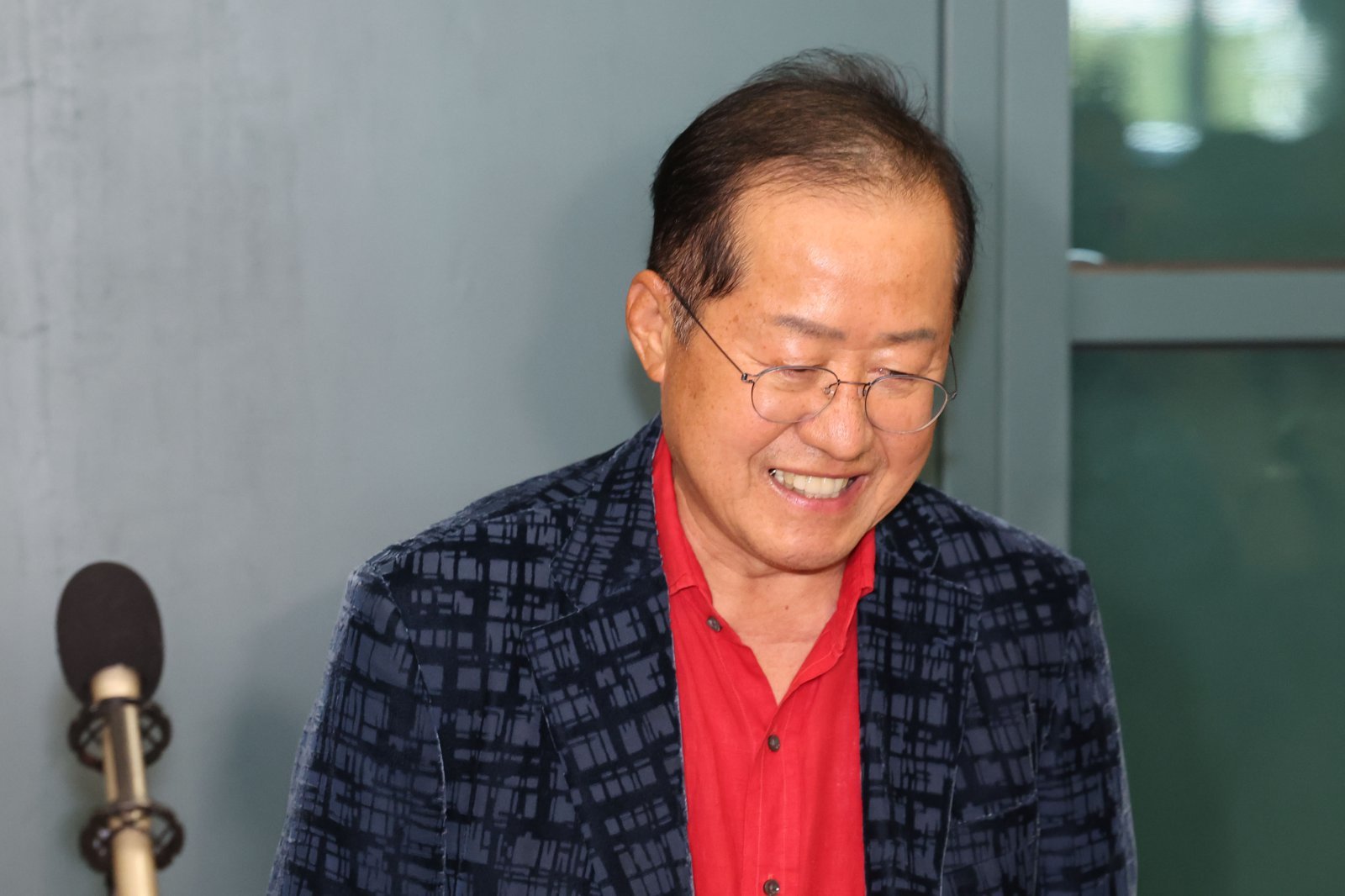

Song Young-gil: 'US State Department bans all photography, can't even photograph backs of heads'
Translated from Korean, summarized and contextualized by DistantNews.
TLDR
- Former Democratic Party leader Song Young-gil questioned the U.S. State Department's strict photography policy during visits.
- Song stated that visitors must surrender their phones, preventing any photos, even of the backs of people's heads, within the State Department building.
- He contrasted this with his own experiences visiting the State Department multiple times and expressed confusion over a recent photo released by a South Korean party leader.
Hankyoreh reports on former Democratic Party leader Song Young-gil's remarks regarding his recent visit to the United States, specifically focusing on his observations about the U.S. State Department's stringent photography regulations.
When you visit the U.S. State Department, you have to leave your phone, so you can't take pictures. You can't even take a picture of the back of someone's head.
Song expressed surprise and confusion over the policy, stating that visitors are required to hand over their mobile phones upon entry, thus prohibiting any form of photography within the building. He emphasized that this rule is strictly enforced, preventing even the capture of images showing the backs of individuals' heads, which he found unusual given his own prior experiences visiting the State Department on several occasions.
His comments appear to be a veiled critique of a recently released photograph by a leader from the ruling People Power Party, which purportedly showed a U.S. State Department official. Song questioned the authenticity of the location, implying that the photo might not have been taken within the State Department premises as claimed, due to the known strictness of their photography ban.
I have visited the State Department three or four times as chairman of the National Assembly's Foreign Affairs and Unification Committee, and all photography is prohibited inside the State Department unless it's a private meeting.
From a South Korean perspective, this story touches upon diplomatic protocols and the nuances of international relations. Hankyoreh's reporting highlights Song's attempt to draw attention to perceived inconsistencies or potential misrepresentations in diplomatic interactions. The article frames Song's comments as a reflection on the importance of transparency and accuracy in political exchanges, particularly when dealing with sensitive foreign policy matters. The reference to the movie 'Gwanghae' adds a layer of cultural commentary, suggesting a critique of subservience or undue deference in diplomatic dealings.
What state secret is it that there are nuclear facilities in North Korea? It reminds me of a scene in the movie 'Gwanghae' where the king laments, 'Which country's ministers are you, which country's subjects?'
DistantNews Editorial
Originally published by Hankyoreh in Korean. Translated, summarized, and contextualized by our editorial team with added local perspective. Read our editorial standards.
More Stories



From Our Blog

What Gets Lost (and Found) When News Is Translated

The Critical Role of Diaspora Media in Global News

What Travellers Should Know About Countries with Restricted Press

A Digital Nomad's Guide to Following Local News

How the Same Story Looks Different in Different Countries
