


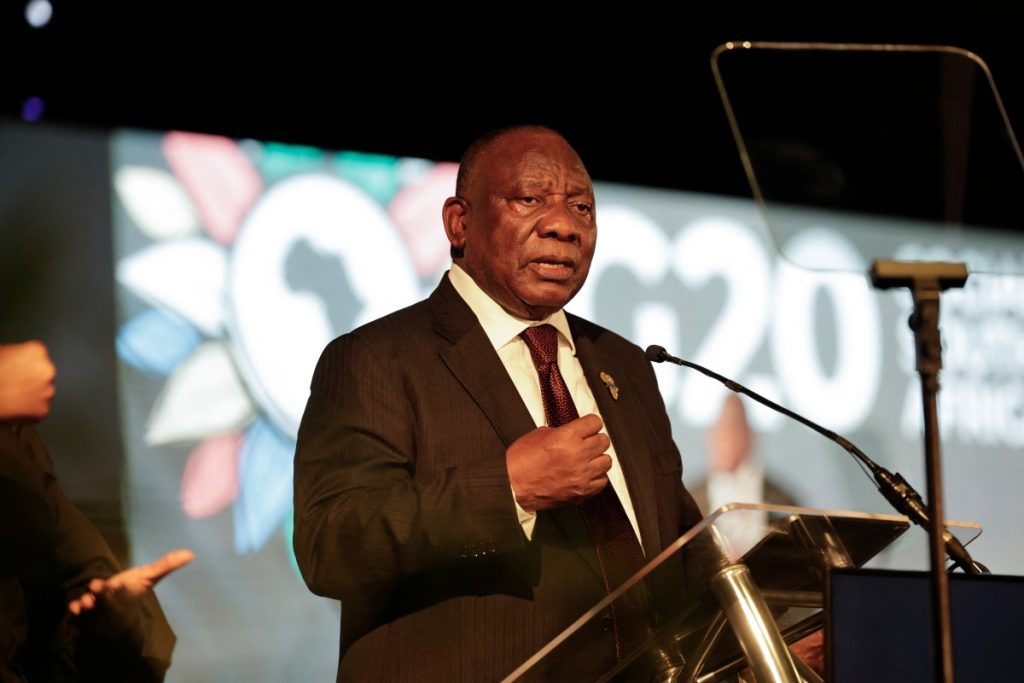
South African president warns against ‘scapegoating’ migrants
Summarized and contextualized by DistantNews.
At a glance
News
Named sources
Context piece
- South African President Cyril Ramaphosa warned against blaming migrants for the country's problems.
- He acknowledged the challenge of illegal immigration but stressed that internal issues are the nation's own responsibility to fix.
- Ramaphosa stated that decisive action is being taken to address illegal immigration.
South African President Cyril Ramaphosa has cautioned against the tendency to scapegoat migrants for the nation's challenges. He acknowledged that illegal immigration presents a significant issue that the government is actively addressing with decisive measures.
However, Ramaphosa emphasized that the country's core problems are internal and that South Africans bear the primary responsibility for resolving them. "Even as we recognise the challenge of illegal immigration... which we are taking decisive action to address, our problems are... our own problems, and which we have a responsibility to fix ourselves," he stated.
His remarks come amid ongoing debates and concerns within South Africa regarding the impact of foreign nationals on the economy and social services. While the government is committed to tackling illegal immigration, the president's message highlights a need for introspection and self-reliance in addressing the nation's broader socio-economic issues.
Even as we recognise the challenge of illegal immigration... which we are taking decisive action to address, our problems are... our own problems, and which we have a responsibility to fix ourselves.
DistantNews Editorial
Originally published by Vanguard. Summarized and contextualized by our editorial team with added local perspective. Read our editorial standards.
More Stories


From Our Blog

How the Same Story Looks Different in Different Countries

What Gets Lost (and Found) When News Is Translated

The Critical Role of Diaspora Media in Global News

What Travellers Should Know About Countries with Restricted Press

A Digital Nomad's Guide to Following Local News
